Introduction
Mining operations based in remote, off-grid locations face unique workforce transportation challenges that standard public transit and generic shuttle systems cannot resolve. For mining companies and mining contractors managing hundreds of on-site workers, core operational pain points remain consistent: employees work rotating day and night shifts, commute from multiple residential villages to mine sites via fixed routes, and operate entirely in areas with spotty, unreliable mobile network coverage.
The critical question for mine site transport managers is clear: How can a mining company control employee access to company buses when employees work different shifts, use different routes, and travel through areas with unreliable mobile network coverage?
A tailored employee shuttle management system built for remote mining sites eliminates these operational gaps by integrating multi-dimensional access control and offline operational capabilities. A complete solution combines RFID/NFC employee badges, QR code temporary verification, full offline passenger validation, rugged bus-mounted terminals, precise employee-to-route assignment, shift-based access control, local offline data storage, automatic cloud synchronization, and centralized shuttle management software. This integrated framework ensures stable, compliant, and traceable employee transportation operations regardless of on-site network conditions.
1. What Is an Employee Shuttle Management System?
An employee shuttle management system is a professional integrated solution tailored exclusively for enterprises operating dedicated employee transportation fleets, especially industrial and remote-site operations. It unifies passenger identity verification, bus access permission control, intelligent route scheduling, shift-based traffic management, and full-cycle transportation data governance, solving the management chaos of manual inspection, unregulated boarding, and untraceable commute records.
Unlike generic public transit systems focused on passenger carrying capacity, this mining-oriented system prioritizes access compliance, operational stability in weak-network environments, and precise personnel scheduling. Its core functional modules and operational purposes are tailored to industrial workforce management needs, as detailed below:
|
Function
|
Purpose
|
|
Employee Identification
|
Verify formal employee identity and eliminate unauthorized personnel boarding
|
|
RFID/NFC Badge Recognition
|
Support fast one-tap identity verification for permanent mine employees
|
|
Route Assignment
|
Bind employees to fixed approved commuting routes to prevent cross-route boarding
|
|
Shift Management
|
Dynamically control boarding access based on day, night, morning and evening shift schedules
|
|
Bus Access Control
|
Intelligently allow or reject boarding requests based on pre-set permission rules
|
|
Offline Validation
|
Maintain full access control functionality without real-time internet connectivity
|
|
Data Synchronization
|
Automatically upload offline-stored commute records once network connectivity is restored
|
|
Centralized Dashboard Monitoring
|
Real-time overview of shuttle operation status, employee boarding records and route usage data
|
2. Why Mining Companies Need Special Shuttle Management Solutions
Standard shuttle management systems designed for urban enterprises, schools or public transportation rely on stable network connectivity and fixed working hours, making them completely unsuitable for harsh mining site scenarios. Remote mining operations have unique environmental, personnel and operational characteristics that demand customized industrial-grade shuttle management solutions.
2.1 Isolated Remote Locations
Most mining sites are situated in remote wilderness areas, far from urban communication and infrastructure support. There is no stable basic network coverage, and on-site communication facilities are often limited and prone to signal interruption, making cloud-based real-time management infeasible.
2.2 Unreliable Mobile Network Coverage
Mining road terrain is complex and changeable, resulting in frequent fluctuations and disconnections of 4G, 5G and Wi-Fi signals. Generic online bus access control systems will stop working once the network drops, leading to paralyzed boarding verification, unrecorded commute data and unregulated personnel access. Mining shuttle systems must support independent offline operation to ensure uninterrupted service.
2.3 Multiple Independent Employee Routes
Mine employees typically commute from scattered surrounding residential villages to centralized mining sites, forming multiple independent fixed routes such as Village A → Mine Site, Village B → Mine Site and Village C → Mine Site. Each employee is only authorized to take the shuttle corresponding to their residential area, and cross-route boarding will cause personnel management confusion and transportation resource waste.
2.4 Complex Rotating Work Shifts
Mining production is a 24/7 continuous operation with staggered day, night, morning and evening shifts. Employees have strict time limits for valid boarding, and off-shift boarding behavior needs to be automatically intercepted to ensure consistency between employee attendance records and production shift arrangements.
2.5 Large On-Site Employee Volume
Large-scale mining projects employ hundreds of frontline workers. Traditional manual boarding inspection is inefficient, prone to human error, and unable to achieve standardized, traceable and intelligent management, which cannot meet the daily high-frequency commuting management needs of mine sites.
3. How Offline Employee Bus Access Control Works
Offline access control is the core competitive advantage of mining-specific employee shuttle management systems, and it perfectly solves the network bottleneck pain point of remote mine sites. The entire verification and recording process does not rely on real-time cloud connectivity, achieving local autonomous operation and zero data loss. The complete working workflow is as follows:
Employee Badge → Bus-Mounted Terminal Validation → Local Rule Verification → Access Granted/Denied → Local Data Storage → Automatic Cloud Synchronization
Step 1: Employee Identity Configuration
All formal mine employees are equipped with exclusive RFID/NFC employee badges. The backend system pre-binds each employee’s ID, department, shift schedule, residential route and authorized shuttle bus information, and synchronizes all permission data to the on-board terminal in advance.
Step 2: On-Board Terminal Identification
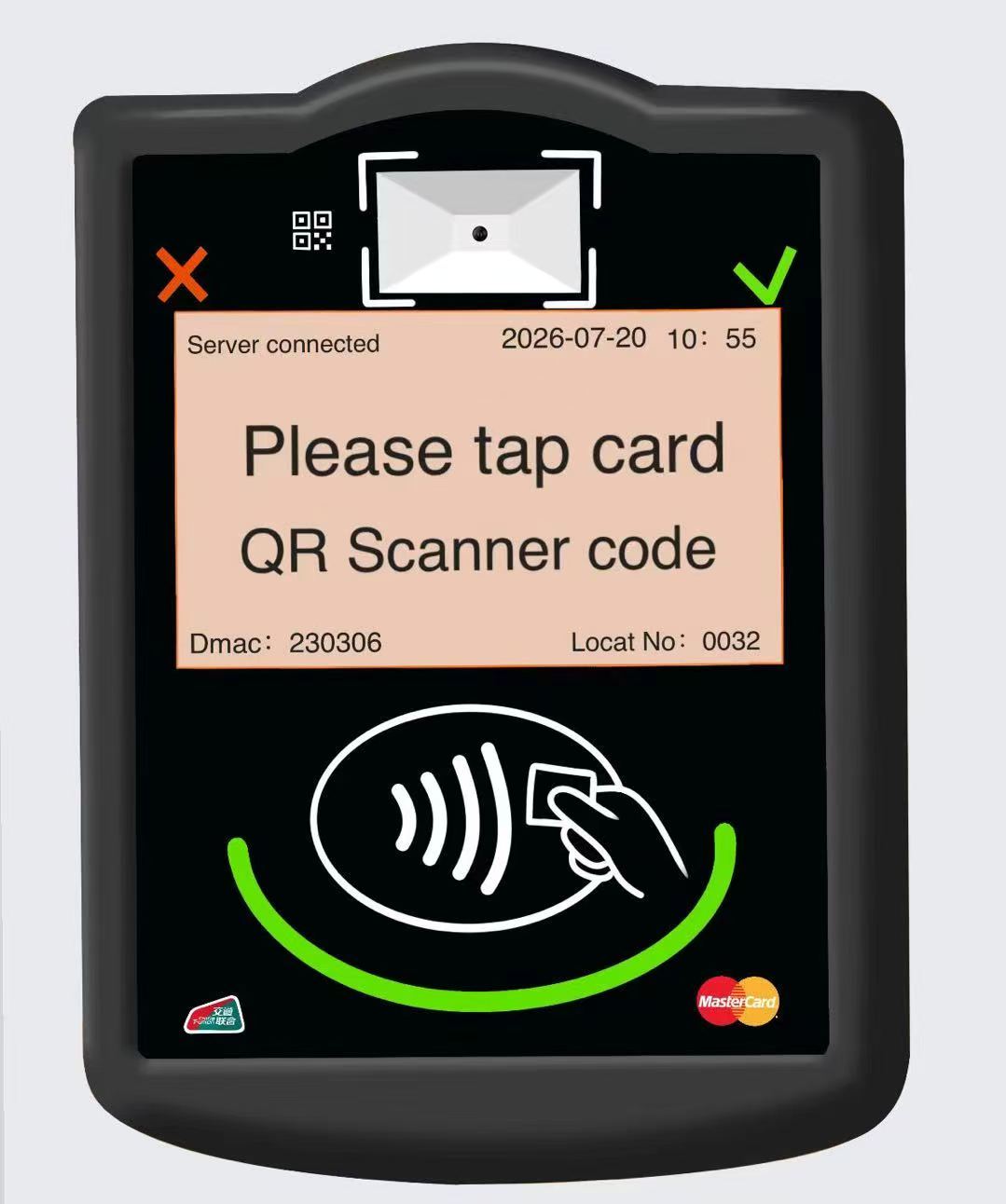
When employees commute, they tap their exclusive badge on the industrial bus validator. The terminal instantly reads core information including employee ID, card number, affiliated commuting route and valid shift period.
Step 3: Fully Offline Local Verification
Regardless of whether the site has network coverage, the terminal independently matches the pre-stored local permission rules. It automatically judges whether the employee’s boarding route and time are within the authorized range, and immediately outputs an authorized or denied result without cloud server interaction.
Step 4: Real-Time Local Data Storage
All boarding behaviors, including employee ID, exact boarding time, bus number, route ID and verification result, are completely stored in the terminal’s local storage space in real time, ensuring that no commute data is lost during network outages.
Step 5: Automatic Data Synchronization
When the shuttle travels to areas with valid network signals, the terminal automatically connects to the cloud backend and synchronizes all offline-stored boarding records to the central management platform, realizing full data traceability without manual intervention.
4. RFID, NFC or QR Code: Which Is Better for Employee Shuttle Access?
Mining sites have different identification requirements for permanent employees, temporary workers and visiting personnel. Choosing the right verification technology can significantly improve boarding efficiency and management standardization. The comparison of mainstream identification technologies suitable for mine shuttle scenarios is as follows:
|
Technology
|
Best For
|
Offline Support
|
Verification Speed
|
Recommendation Level
|
|
RFID
|
Permanent mining employee daily boarding
|
Yes
|
Fast
|
★★★★★
|
|
NFC
|
High-security employee ID card verification
|
Yes
|
Fast
|
★★★★★
|
|
QR Code
|
Temporary workers, contractors and visitors
|
Optional
|
Medium
|
★★★★
|
|
Barcode
|
Basic temporary identity verification
|
Yes
|
Medium
|
★★★
|
For long-term formal mining employees, RFID and NFC badge solutions are the most practical choice. Employees can complete fast verification by simply tapping their existing work badges, which is efficient, durable and suitable for high-frequency industrial scenarios. QR codes are reserved for flexible management of temporary personnel, forming a comprehensive verification system that covers all on-site personnel types.
5. Employee-to-Route and Shift Management Mechanism
The core of mine shuttle management is refined personnel-route-shift matching, which solves the customer’s core demand of "employee assignment to routes for travel team management". The system adopts a hierarchical binding logic from departments to individuals to realize one-to-one precise authorization:
Employee → Department → Working Shift → Assigned Commute Route → Authorized Shuttle Bus → Boarding Access Permission
Each employee’s boarding permission is uniquely defined by the combination of shift and route, realizing precise interception of non-compliant behaviors. The actual management rules are demonstrated in the table below:
|
Employee
|
Working Shift
|
Assigned Route
|
Authorized Bus
|
Boarding Access
|
|
Employee A
|
Day Shift
|
Village A → Mine Site
|
Bus 01
|
Allowed
|
|
Employee B
|
Night Shift
|
Village B → Mine Site
|
Bus 05
|
Allowed
|
|
Employee C
|
Day Shift
|
Village B → Mine Site
|
Bus 05
|
Denied
|
This hierarchical permission mechanism completely avoids disorderly boarding, realizes standardized allocation of shuttle resources, and provides accurate data support for the on-site travel team’s daily scheduling and personnel management.
6. Can an Employee Shuttle System Work Without Internet?
Yes, fully. The biggest difference between mining-grade shuttle management systems and ordinary commercial systems is powerful offline operation capability. For remote mining sites with long-term unstable network coverage, internet-free operation is not an optional function but a core necessary capability.
Before the shuttle starts operation, the backend management platform uniformly pushes all core data including employee information, badge IDs, route allocation rules, shift schedules and access permission strategies to the bus-mounted terminal’s local database. During the entire driving process in network-blind areas, the terminal relies entirely on local data for identity verification, access judgment and record storage, with no dependence on real-time cloud network.
Once the shuttle enters a network-covered area, the system will automatically trigger full data synchronization, upload all offline boarding records to the cloud server, and update the latest permission rules synchronously. The whole process is automatic and seamless, ensuring zero interruption of shuttle services and zero loss of management data.
7. Core Modules of Mining-Focused Shuttle Management Software
A complete employee shuttle management solution for mining sites consists of industrial hardware terminals and supporting centralized management software, realizing full-cycle closed-loop management of personnel, vehicles, routes and data. The core software functional modules cover all mine transportation management scenarios:
7.1 Employee Management
Unified maintenance of employee ID information, badge numbers, affiliated departments, employment status and permission binding relationships, supporting batch import and dynamic update of employee data to adapt to frequent personnel changes in mining projects.
7.2 Route Management
Customize multiple fixed commuting routes covering residential villages and mine sites, mark pickup points and driving ranges, and realize fixed binding of routes and shuttle buses to avoid route confusion.
7.3 Shift Management
Set flexible shift schedules including day, night, morning and evening shifts, configure valid boarding time windows for each shift, and realize intelligent time-based access control.
7.4 Vehicle Management
Record bus ID, driver information, corresponding routes and operating schedules, realize one-variable control of vehicle operation status, and facilitate scheduling and maintenance management.
7.5 Passenger Record Statistics
Automatically retain all boarding history data, including employee information, boarding time, bus number and route information, forming traceable transportation data archives for attendance verification and operational analysis.
8. System Interception Rules for Non-Compliant Boarding Behaviors
The system’s intelligent access control rules can automatically identify and intercept two most common non-compliant boarding scenarios in mine site management, effectively standardizing employee commuting behaviors:
8.1 Wrong Route Boarding Interception
If an employee assigned to the Village A → Mine route attempts to board a Village B → Mine shuttle bus, the terminal will instantly pop up a Wrong Route / Not Authorized for This Bus prompt and reject the boarding request. This prevents cross-route personnel mixing and ensures accurate matching of employees and transportation resources.
8.2 Off-Shift Boarding Interception
For night-shift employees who try to board the shuttle during daytime working hours, the system will automatically identify the time mismatch and display Access Denied – Outside Authorized Shift. This shift-based access control mechanism ensures that commute behaviors are completely aligned with mine production schedules.
9. Recommended System Architecture for Mining Shuttle Operations
The industrial-grade shuttle management system adopts a layered and modular architecture, which is stable, scalable and convenient for secondary development and system integration for mining enterprises. The complete technical architecture is as follows:
Employee RFID/NFC Badge → Bus-Mounted Intelligent Terminal → Offline Local Access Control → On-Board Local Database → 4G/Wi-Fi Network Synchronization → Cloud Management Server → Shuttle Operation Management Platform → On-Site Travel/HR Management Team
To meet the personalized integration needs of large mining enterprises, the system reserves complete API and SDK interfaces, which can seamlessly connect with existing enterprise HR systems, ERP systems, workforce management platforms, payroll systems, access control systems and fleet management systems, realizing unified data management of the entire enterprise.
10. Industrial-Grade Hardware Requirements for Mining Shuttle Buses
Mine shuttle buses have complex operating environments and strict equipment stability requirements. Ordinary commercial card readers cannot adapt to long-term high-intensity industrial operation. Professional mining shuttle terminals need to meet industrial-grade standards in all aspects of performance and functions.
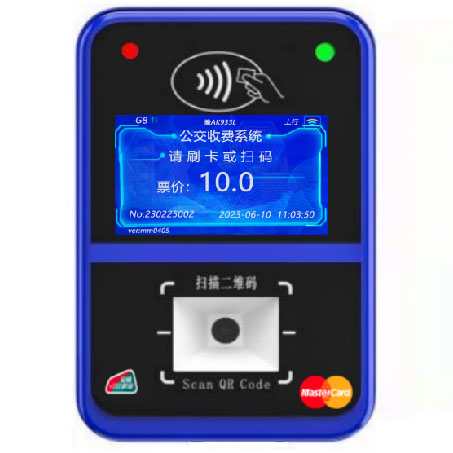
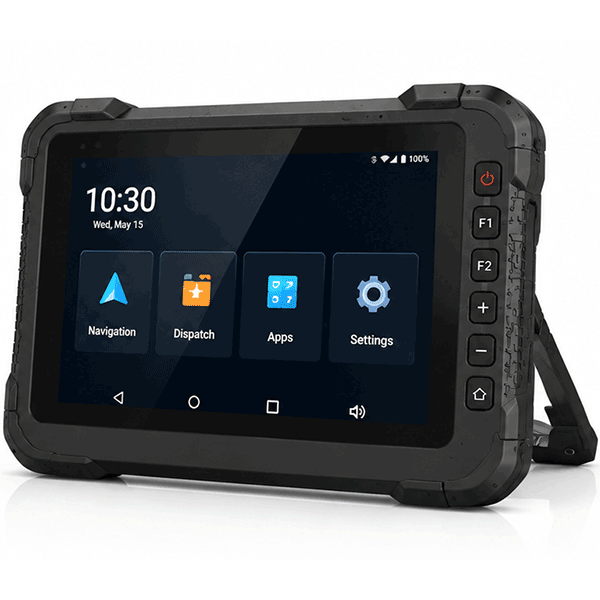
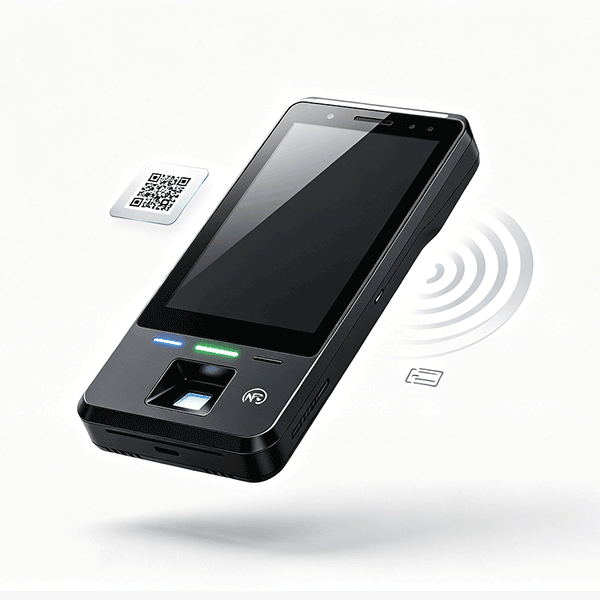
As a professional provider of industrial AIoT intelligent terminals, YunBlaze Technologies provides customized industrial Android bus validators exclusively for remote mining site scenarios, fully matching the harsh operational needs of mine employee shuttle management. Our core hardware advantages are rooted in 15 years of industrial embedded hardware development and OEM/ODM manufacturing experience, with product configurations tailored for mining scenarios:
-
Industrial Android Platform: Adopts stable industrial-grade Android system, supports personalized system customization, long-term stable operation, and adapts to vehicle vibration and temperature changes.
-
Dual RFID/NFC Identification: Supports fast tapping verification of employee work badges, high recognition sensitivity, suitable for high-frequency boarding scenarios.
-
QR Code Scanning Function: Meets the temporary boarding verification needs of contractors, visitors and temporary workers, realizing full personnel coverage.
-
Multi-Mode Communication: Compatible with 4G, Wi-Fi and Ethernet communication methods, adapting to different network environments of mine sites, ensuring flexible data synchronization.
-
Large-Capacity Offline Storage: Built-in local storage space, supports long-term offline data caching, completely solving the problem of network interruption data loss.
-
Optional GPS Module: Can be equipped with GPS positioning function according to project needs, realizing real-time tracking of shuttle driving routes and vehicle location management.
-
Peripheral Expansion Interface: Reserved Relay/GPIO interfaces, which can be connected to vehicle door control, buzzers and indicator lights to realize intelligent linkage control.
-
Complete SDK/API Support: Provides open development interfaces, supporting secondary development and seamless integration with customer’s existing employee management and shuttle scheduling software.
11. Custom Software vs Ready-Made Shuttle Management Software
Mining enterprises have differentiated management demands for shuttle systems. Some enterprises have mature internal management platforms, while others need a one-stop complete solution. YunBlaze provides three flexible deployment modes to match different project needs, avoiding the rigid matching problems of single standardized products:
Option 1: Hardware + Existing Customer Software
Suitable for mining enterprises that already have complete employee scheduling and transportation management systems. We only provide industrial bus terminals and data transmission support, realizing hardware docking and data synchronization with the customer’s existing platform, reducing repeated investment.
Option 2: Customized Complete Shuttle Management Platform
Suitable for projects that need a full set of management functions including employee management, route scheduling, shift control, vehicle management and data statistics. We customize the exclusive shuttle management platform according to mine site management rules to realize one-stop intelligent management.
Option 3: Hardware + SDK/API Secondary Development
Suitable for large-scale mining groups with independent R&D capabilities. We provide complete hardware equipment and open development kits, allowing customers to independently develop personalized management functions based on their own business processes, with higher flexibility and scalability.
12. Offline vs Online Shuttle Access Control System: Core Comparison
For remote mining operation scenarios, offline-capable systems are far more practical and reliable than pure online systems. The core performance comparison is as follows:
|
Feature
|
Online System
|
Offline-Capable System
|
|
Internet Dependence
|
Required for all operations
|
Not required for core verification
|
|
Applicability to Remote Mining Sites
|
Limited, unstable operation
|
Excellent, fully adaptive
|
|
Real-Time Validation Capability
|
Dependent on network
|
Local real-time verification
|
|
Network Failure Adaptability
|
Stops validation completely
|
Continues normal operation
|
|
Data Storage Mode
|
Cloud-only storage
|
Local + cloud dual backup
|
|
Data Synchronization Mode
|
Real-time synchronization
|
Automatic synchronization after network recovery
|
For remote mining operations with unstable network conditions, an offline-capable shuttle access control system is the only reliable solution to ensure continuous and standardized employee transportation management.
13. Cross-Industry Use Cases Beyond Mining
The offline employee shuttle management system developed by YunBlaze is not limited to mining scenarios. It can be fully adapted to various remote industrial sites with weak network and shift-based employee management needs, expanding the application scope of the solution and bringing more value to enterprise investment:
-
Oil & Gas: Remote oil field worker camp commuting management
-
Construction Sites: Personnel transportation management for large remote construction projects
-
Manufacturing Plants: Fixed-route shift commuting for factory employees
-
Industrial Parks: Centralized employee transportation scheduling and access control
-
Power Plants: Remote power facility staff commute management
-
Remote Worker Camps: Closed-loop personnel transportation management for various remote camps
14. Standard Deployment Process for Mining Shuttle Management Systems
Combined with the actual construction cycle and on-site conditions of mining projects, we have summarized a set of standardized, efficient and low-risk system deployment processes, which can meet the customer’s requirement of official launch before December 2026:
Phase 1 – Employee Data Sorting: Complete batch import and verification of mine employee information, badge data and department information to build a basic personnel database.
Phase 2 – Route Rule Configuration: Sort out all commuting routes from residential villages to mine sites, complete the binding of routes and shuttle buses, and set exclusive route permissions.
Phase 3 – Shift Schedule Setting: Configure day and night shift working rules and valid boarding time windows, and complete the matching of employees and shift permissions.
Phase 4 – On-Site Device Installation: Complete the installation and debugging of industrial terminals on 23 existing shuttle buses, with minimal modification to contractor vehicles as required.
Phase 5 – Offline Function Testing: Simulate network interruption scenarios to fully verify the stability of offline verification, local storage and post-network-recovery synchronization functions.
Phase 6 – Small-Scale Pilot Operation: Launch pilot operation on 5-10 buses, optimize permission rules and operation processes according to on-site feedback.
Phase 7 – Full-Scale Deployment: Complete the full popularization of all shuttle devices and system functions, and reserve expansion space for the increased buses in 2027.
15. Key Questions to Evaluate a Mining Shuttle Management System
When purchasing a mining-specific employee shuttle management system, mining project procurement and technical teams can judge the professionalism and adaptability of the solution through the following core questions, to avoid selecting generic products that cannot adapt to remote site scenarios:
-
Can the system operate fully without internet connection in remote mining areas?
-
Can employee badge verification and access judgment be completed locally offline?
-
Can employees be accurately assigned to exclusive fixed commuting routes?
-
Can boarding access be strictly controlled according to employee shift schedules?
-
Can the system automatically intercept unauthorized and off-spec boarding behaviors?
-
How much offline passenger data can the terminal store to adapt to long-term network disconnection?
-
How does the system complete data synchronization and data repair after network recovery?
-
Does the terminal support mainstream RFID/NFC employee badge identification?
-
Is temporary passenger QR code verification function available?
-
Can the system be seamlessly integrated with the existing enterprise HR and workforce management system?
-
Are complete SDK and API development interfaces provided for secondary development?
-
Can industrial Android system and terminal hardware be customized according to project requirements?
-
Can GPS positioning and 4G communication modules be flexibly integrated?
-
Can the entire system stably adapt to long-term operation in remote mining environments?
16. FAQ for Mining Offline Employee Shuttle Management Systems
Q1: Can a mining shuttle management system work without Internet? A1: Absolutely yes. Professional mining-grade bus validators support full local offline authorization and data storage. All core boarding verification functions operate normally without network, and all records will be automatically synchronized to the cloud once connectivity is restored with zero data loss.
Q2: Can employees be assigned to specific bus routes? A2: Yes. The system supports one-to-one binding of employees, departments, residential areas and commuting routes, and only allows employees to board the designated route shuttle to realize standardized route management.
Q3: Can access control be implemented based on employee working shifts? A3: Yes. The platform supports customized shift schedules and time-based access rules, which can automatically identify off-shift boarding behaviors and intercept non-compliant access, matching mine shift production management.
Q4: Are RFID employee cards supported for boarding verification? A4: Yes. Our industrial terminals are fully compatible with RFID and NFC badge identification, which is the most efficient and stable verification method for permanent mine employees.
Q5: Is the system suitable for remote mining areas with poor network? A5: Yes. The entire solution is optimized for remote industrial sites. The core offline operation capability completely solves the network instability problem, ensuring long-term stable operation of shuttle management business.
Q6: Can the system integrate with existing enterprise HR software? A6: Yes. We provide complete SDK and API interfaces, supporting seamless docking with HR systems, workforce management platforms and ERP systems to realize unified data management.
Q7: Can the bus terminal hardware and software be customized? A7: Yes. As a professional OEM/ODM manufacturer, we support Android OS customization, UI interface adjustment, hardware peripheral matching, logo
17. About YunBlaze Technologies
YunBlaze Technologies is a professional high-tech enterprise focused on industrial Android mainboard development, embedded hardware design, AIoT intelligent terminal R&D and one-stop OEM/ODM manufacturing services. With 15+ years of experience in intelligent hardware development and industrial manufacturing, we are rooted in Shenzhen’s global electronic innovation supply chain ecosystem, providing reliable end-to-end hardware and software integrated solutions for global industrial enterprises.
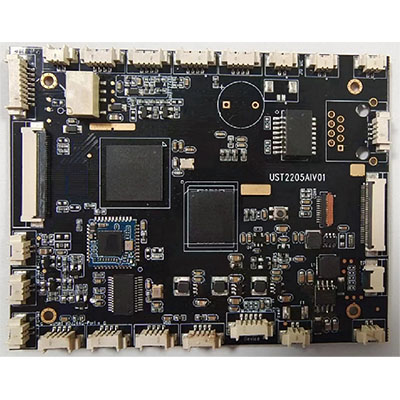
Our core business covers industrial Android mainboard customization, embedded system development, AIoT smart terminal design, vehicle-mounted terminal solutions, industrial automation controllers and customized medical and health equipment development. Unlike traditional PCBA processing factories, YunBlaze focuses on providing complete industrial-grade intelligent hardware platforms, covering the whole process from motherboard architecture design, hardware engineering development, software integration debugging to industrial design and mass production.
We provide flexible and comprehensive customization services including PCB/PCBA development, Android OS customization, UI/UX design, mechanical structure development and embedded software development. Our products are widely applied in public transportation fare collection, fleet management, industrial automation, smart retail, medical equipment and remote industrial site personnel management scenarios.
Dedicated to solving the pain points of stable operation and intelligent management of intelligent terminals in harsh industrial environments, YunBlaze’s industrial vehicle-mounted shuttle terminals have been fully optimized for remote mining, oil and gas, and construction site scenarios, with outstanding offline operation stability, industrial-grade durability and secondary development flexibility.
CTA: Looking for a reliable offline employee shuttle access control and management solution for your remote mining site? Contact YunBlaze Technologies today to discuss your route configuration, shift management, network adaptation and system integration requirements, and get a customized professional solution and formal commercial proposal before your 2026 December launch deadline.
YunBlaze Technologies – Empowering Intelligent Hardware, Accelerating AIoT Innovation.