For concerts, music festivals, sports matches and large-scale ticketed events, fast and reliable entry management is essential. Attendees expect smooth check-in, while organizers need accurate ticket verification to prevent fraud, manage capacity and maintain safe crowd flow.
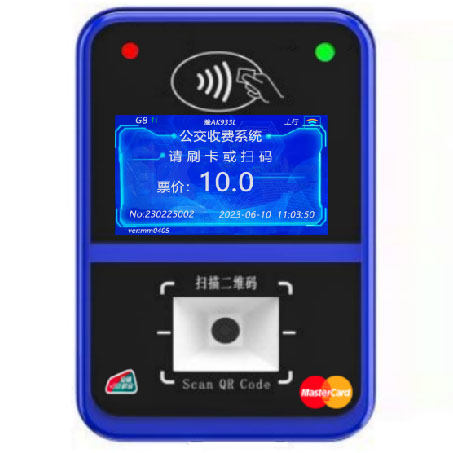
A QR Code and RFID Scanner helps event operators read electronic tickets, printed passes, RFID cards or wristbands at the entrance. When integrated with suitable validation software and backend systems, it becomes an important part of a complete Event Ticket Validation System. For activity equipment purchasers, ticketing system integrators and access control suppliers, selecting the right Concert Entry Scanner or Ticket Verification Device can significantly improve on-site efficiency and attendee experience.
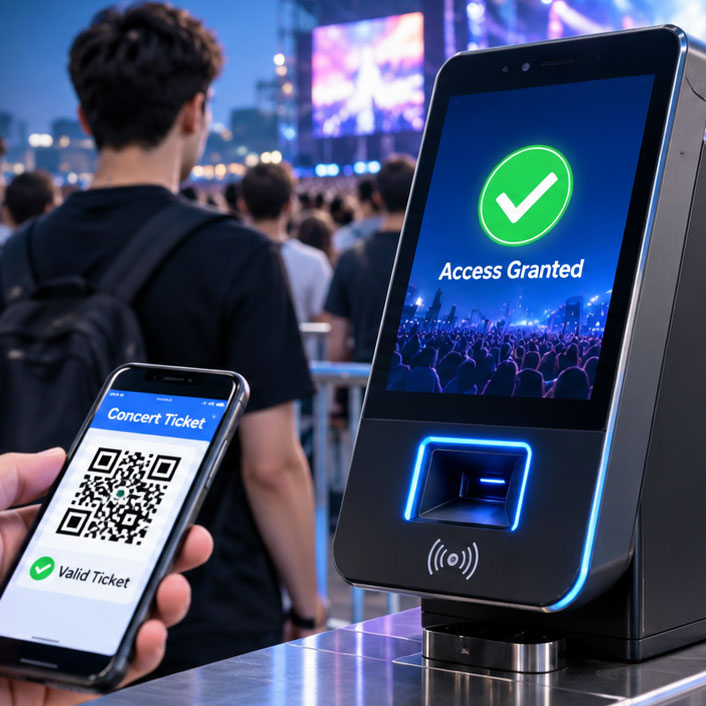
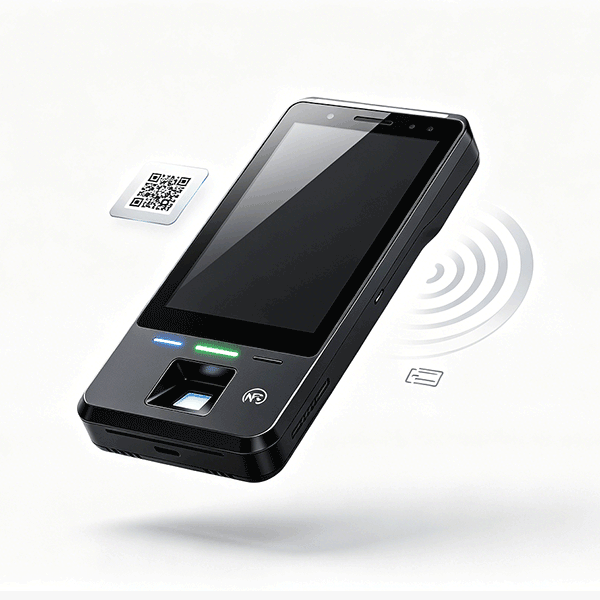
An event ticket scanner is a device used to read ticket credentials at venue entrances. Depending on its hardware configuration, it may support:
It is important to distinguish between a basic scanner, an integrated validation terminal and a full ticketing system. A scanner reads ticket data. A validation terminal may also run software to process that data. A complete event ticket validation system usually includes scanners or terminals, ticketing software, databases, network infrastructure and access control equipment.
A typical concert entry process follows these steps:
The scanning device is responsible for reading ticket data. It does not necessarily complete ticket verification on its own. Verification logic, duplicate-entry control and data synchronization usually depend on the accompanying software and backend system.
| Comparison | QR Code Scanner | RFID Scanner |
|---|---|---|
| Ticket format | Printed or digital QR codes | Compatible RFID cards, wristbands or tags |
| Reading method | Optical scanning | Radio-frequency identification |
| Ticket presentation | Ticket must be visible to the scanner | Depends on reader and card/tag design |
| Typical applications | Mobile tickets and e-tickets | RFID wristbands and access cards |
| Integration | Ticket validation software or backend | Compatible reader, ticket credentials and backend |
| Key selection factor | Scan performance and code compatibility | Frequency, protocol and credential compatibility |
QR code scanning is suitable for events that issue mobile e-tickets, digital passes or printed tickets. It is widely used because most attendees already carry smartphones, and QR codes can be generated directly from ticketing platforms.
When choosing a QR code scanner, buyers should consider:
It is recommended to test the scanner with real tickets, target devices and actual venue lighting before mass deployment.
RFID scanning is often chosen for music festivals, theme parks, stadiums and events that use RFID wristbands, access cards or embedded tags. It can support faster tap-and-go entry and may reduce the need for attendees to open an app or show a screen.
However, RFID compatibility is not universal. Buyers should confirm:
Existing tickets and credentials should be tested with the reader before purchase.
Yes, some integrated terminals can support both QR code scanning and RFID reading. This usually requires the device to be equipped with a QR code scanning module and an RFID/NFC reader module, as well as software that can process both credential types.
Whether a dual-mode solution is suitable depends on:
Buyers should define their ticketing requirements first, then select a device that supports the necessary modules.
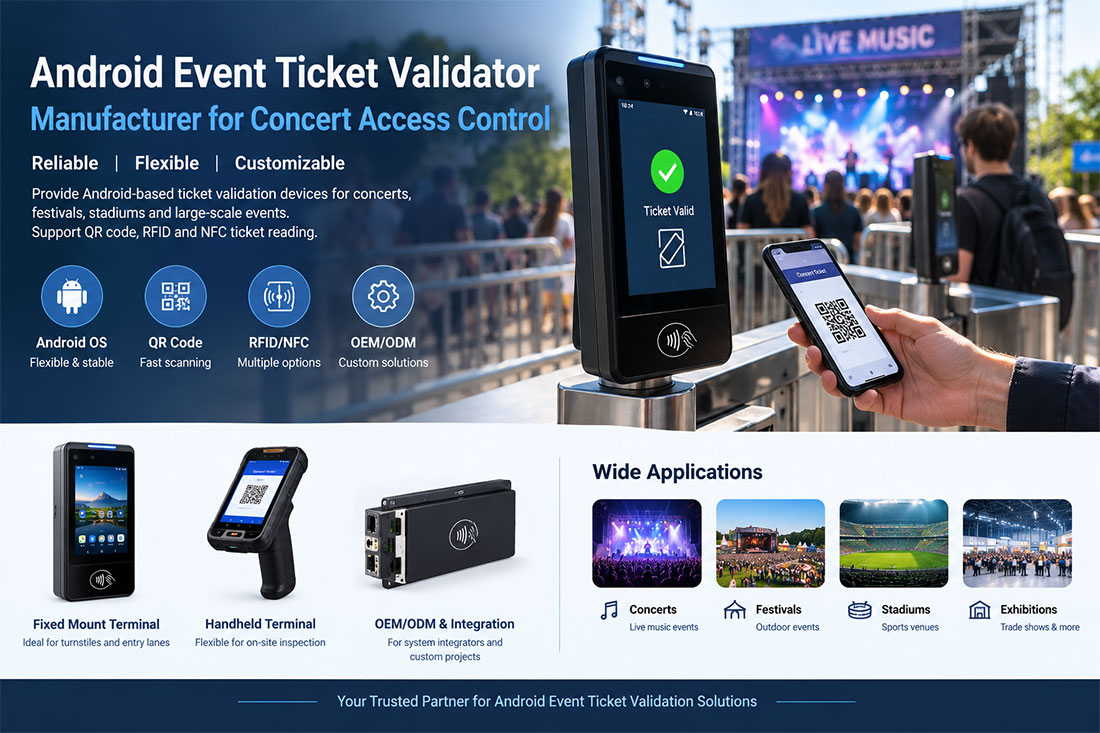
For concert entry, QR code readers must handle both printed tickets and mobile phone screens. Good performance depends on the scanning engine, decoding algorithm and optical design.
Important evaluation points include:
Real-world testing with the target ticketing app and typical attendee devices is strongly recommended.
RFID readers are not automatically compatible with all cards or wristbands. Different projects may use different frequencies, protocols, encryption methods and tag types.
When evaluating an RFID scanner, confirm:
Compatibility should be verified with actual credentials rather than assumed from general specifications.
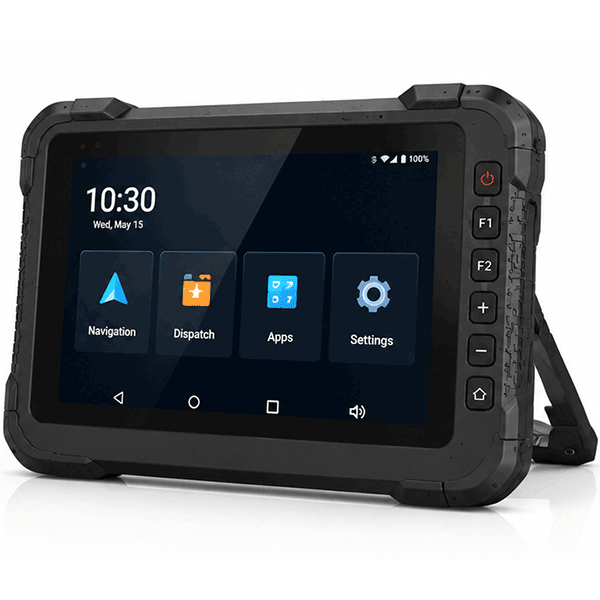
If the device runs Android, it can offer greater flexibility for deploying third-party validation applications, custom interfaces and system-level integration. Android-based terminals may support customized boot screens, restricted kiosk modes and integration with external peripherals.
However, an Android terminal is not a complete ticketing management system by itself. Its actual capabilities depend on:
Buyers should confirm whether their existing software can run on the target device.
Ticket verification devices may support USB, Ethernet, Wi-Fi, Bluetooth, 4G or other interfaces, depending on the model. These connections allow the device to communicate with ticketing servers, access control systems or local validation databases.
For system integrators, the following should be confirmed in advance:
Not all devices support every integration scenario, so interface compatibility must be checked before deployment.
Concert entrances often experience short periods of very high traffic. The scanner must maintain stable performance during continuous use.
Key performance factors include:
Actual performance should be validated through sample testing and simulated entry scenarios rather than relying only on theoretical specifications.
QR code and RFID scanners are commonly used for concert ticket verification, entrance checks and lane management. They can be deployed as handheld units for staff-assisted checking, or as fixed terminals integrated with turnstiles and access gates.
Integration with the ticketing platform allows the system to check ticket validity, entry rights and usage status in real time or through synchronized data.
Music festivals often involve multiple entrances, multi-day access and large attendee volumes. RFID wristbands are frequently used to simplify entry and improve throughput.
For outdoor deployments, buyers should consider:
Stadiums and sports venues require reliable ticket verification across many entry points. Scanners may need to work with existing ticketing systems, season-pass databases and channel control equipment.
In these environments, device stability, integration capability and clear entry feedback are especially important.
Exhibitions and trade shows often use QR codes for e-tickets and RFID badges for visitor management. Scanners can support check-in, zone access control and visitor flow monitoring.
They may also be used together with registration systems to track attendance, session access or exhibitor privileges.
Amusement parks, scenic spots and paid attractions can use QR code and RFID scanners for entry validation, re-entry control and membership verification.
The system configuration should reflect the venue’s rules, such as single-entry tickets, multi-day passes, wristband-based access or repeat-entry permissions.
| Comparison | Fixed-Mount Scanner | Handheld Ticket Scanner |
|---|---|---|
| Installation | Mounted at an entrance or gate | Operated by staff |
| Typical use | Dedicated entry lanes | Mobile or temporary ticket checks |
| Power supply | Depends on installation design | Depends on battery and charging design |
| Deployment | Suitable for fixed access points | Suitable for flexible deployment |
| Integration | May connect to a gate controller | May connect to mobile or event software |
| Best fit | Permanent or structured entry lanes | Temporary events and mobile inspection |
Fixed-mount scanners are suitable for venues with permanent entrances and structured queues. Handheld scanners are more flexible and better suited for temporary events, overflow lanes or mobile inspection.
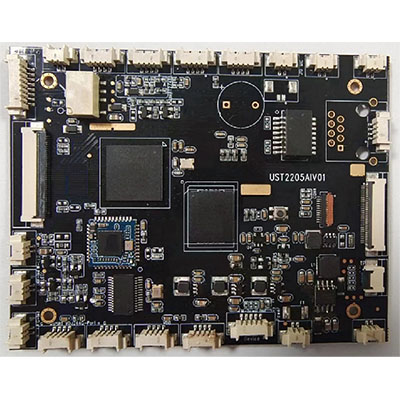
YunBlaze Technologies provides OEM and ODM support for QR code and RFID scanning terminals. Hardware customization options may include:
The available customization scope depends on the product platform, project requirements and technical feasibility.
We support software integration based on customer needs, including:
The ticketing platform, validation rules and access control logic are typically provided by the customer or their software partner. YunBlaze focuses on hardware, system integration support and device-level customization.
For B2B buyers and system integrators, private label options may include:
Minimum order quantity, lead time and customization cost depend on the project scope and should be confirmed during quotation.
YunBlaze serves event equipment distributors, ticketing system integrators and project purchasers. For bulk orders, we recommend confirming:
Providing clear project specifications helps identify the most suitable device configuration.
When selecting a supplier, buyers should verify the following:
It is a device used to read QR code tickets or compatible RFID credentials at event entrances. The scanned data is then processed by validation software or a backend system to determine whether entry should be allowed.
Yes, if the device supports the required QR code format and screen reading. Actual performance should be tested with the target phones, screen brightness and venue lighting conditions.
Some integrated devices can support both, but they must be equipped with the corresponding scanning and reading modules. Software support and system integration also need to be confirmed.
NFC is a short-range wireless communication technology that is related to RFID. RFID covers a wider range of frequencies and identification technologies. Not all RFID readers support NFC, and compatibility must be checked based on the specific protocol and credential.
Integration may be possible depending on the device interfaces, gate controller protocol and system architecture. It should not be assumed that every scanner can directly control every turnstile or gate.
This depends on the validation software. Offline operation may be supported if the application can store ticket data locally, manage duplicate-entry rules and synchronize records when the network is restored.
Yes. YunBlaze provides OEM/ODM services that may include hardware configuration, branding, interface customization and software integration support. Specific options, MOQ and lead time should be confirmed per project.
To receive an accurate quotation, please provide:
QR code and RFID scanners play an important role in modern concert entry and ticket verification. The right device depends on ticket format, venue layout, software platform, system interfaces and expected attendee volume.
For overseas distributors, event equipment suppliers and system integrators, early confirmation of compatibility and integration requirements can reduce deployment risk and improve on-site efficiency.
Call to Action: Contact our team to discuss your QR code and RFID ticket scanning requirements for concerts, festivals, stadiums and other ticketed events. Share your ticket formats, integration requirements and target order quantity to identify a suitable device solution.