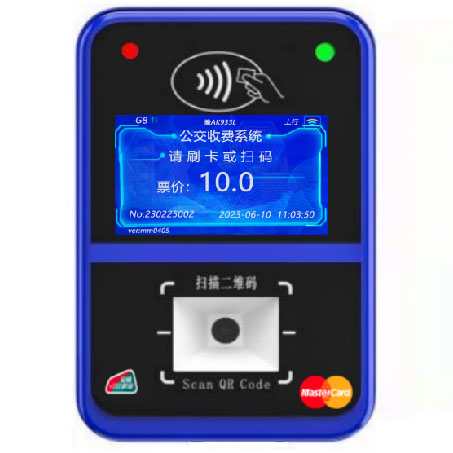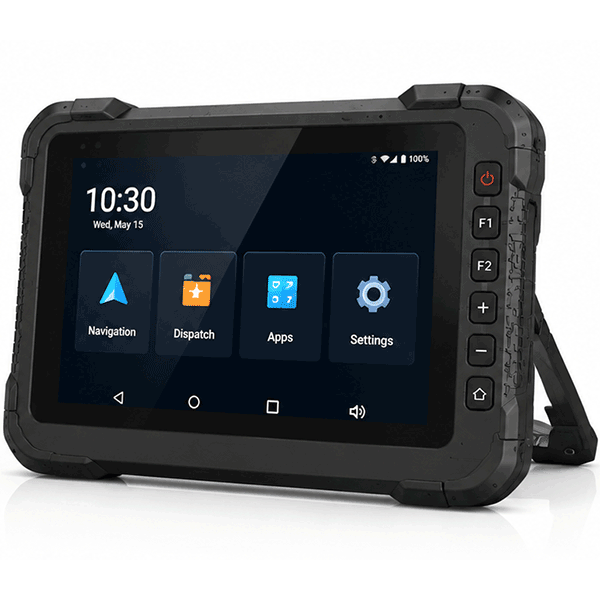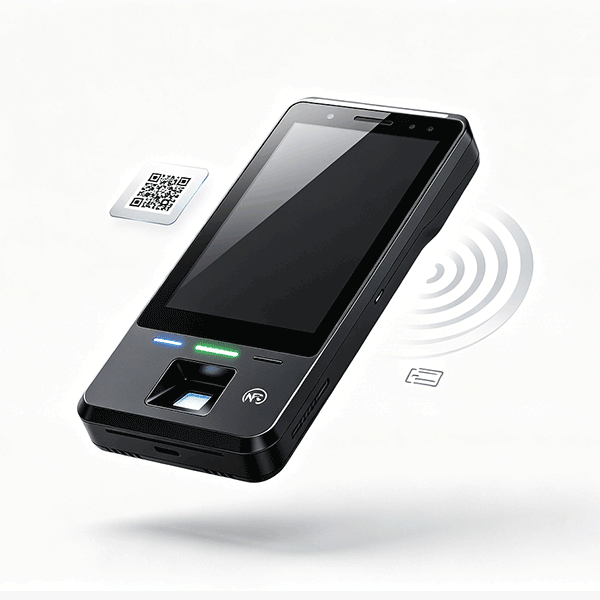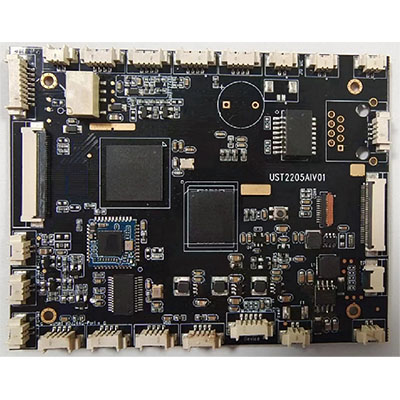
QR code payment systems are revolutionizing public transport in emerging markets. From Jakarta to Nairobi, from Manila to Bogotá, bus operators are discovering that QR technology offers the perfect balance of affordability, accessibility, and functionality. This article explores why QR code bus payment terminals are dominating Southeast Asia, Africa, and Latin America, and how YunBlaze helps transport operators deploy these solutions effectively.
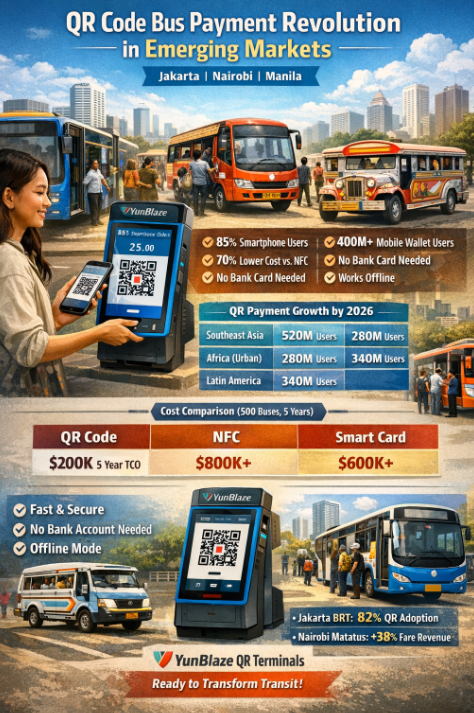
Multiple converging factors make QR code the ideal payment method for developing economies:
· Smartphone Penetration: 85%+ in Southeast Asia, 75%+ in Africa urban areas
· Mobile Wallet Adoption: 400 million+ users in Southeast Asia alone
· Infrastructure Cost: 70-80% lower than NFC terminal deployment
· User Familiarity: Consumers already use QR for retail, food, services
· No Card Required: Works with any smartphone, no bank card needed
· Offline Capability: QR codes can be validated without constant connectivity
|
Region |
Smartphone Penetration |
QR Payment Users 2026 |
|
Southeast Asia |
87% |
520 million |
|
Africa (Urban) |
76% |
280 million |
|
Latin America |
82% |
340 million |
|
South Asia |
68% |
650 million |
|
Global Average |
72% |
2.8 billion |
For budget-conscious transport authorities, the economics are decisive:
|
Cost Factor |
QR Code |
NFC Contactless |
Smart Card |
|
Terminal Hardware |
$50-150 |
$150-400 |
$100-300 |
|
Per Transaction Fee |
$0.02-0.05 |
$0.08-0.15 |
$0.05-0.10 |
|
User Access Cost |
$0 (smartphone) |
$0-50 (card) |
$5-15 (card) |
|
Backend Infrastructure |
$20,000-50,000 |
$50,000-150,000 |
$80,000-200,000 |
|
Deployment Timeline |
2-4 weeks |
4-8 weeks |
8-16 weeks |
|
5-Year TCO (500 buses) |
$200,000-400,000 |
$600,000-1,200,000 |
$500,000-900,000 |
Key Finding: QR code systems offer 60-70% cost savings vs. NFC for equivalent coverage
· Scan Time: 0.5-1.5 seconds per passenger
· Throughput: 40-60 passengers per minute per terminal
· Success Rate: 98%+ first-scan success in field conditions
· Offline Mode: Cached validation for connectivity gaps
· Peak Hour Performance: No degradation during rush hours
· Dynamic QR: Time-limited codes prevent screenshot fraud
· Encryption: AES-256 encryption for all transactions
· Tokenization: No sensitive data stored on device
· Backend Validation: Real-time fraud detection algorithms
· Audit Trail: Complete transaction history for reconciliation
· No Bank Account Required: Works with e-wallets, cash top-up
· Low-End Smartphones: Works on $50 Android devices
· Multiple Languages: Local language support in passenger app
· Tourist Friendly: No local SIM or bank account needed
· Inclusive Design: Large QR codes for elderly, visually impaired
|
Specification |
Detail |
|
Scanner Type |
High-speed 2D imager |
|
Scan Rate |
200+ scans per second |
|
Display |
7-inch IPS touchscreen |
|
Connectivity |
4G LTE, WiFi, GPS |
|
Operating System |
Android 11 (customizable) |
|
Power Input |
12-24V DC (vehicle power) |
|
Backup Battery |
4-6 hours operation |
|
Durability |
IP65, -20°C to 70°C |
|
Dimensions |
220mm x 140mm x 65mm |
|
Weight |
650g |
· Regional Wallets: GrabPay (SEA), GCash (Philippines), Dana (Indonesia)
· Global Platforms: Alipay, WeChat Pay, PayPal QR
· Custom Wallets: Operator-branded mobile applications
· Transit QR: EMVCo-compliant transit QR codes
· Printed QR: Paper tickets with QR for tourists, occasional riders
· Hardware: Logo printing, color customization, mounting brackets
· Software: Branded UI, local language, custom fare rules
· Firmware: Payment method prioritization, offline rules
· Integration: API connections to existing backend systems
· Packaging: Custom boxes, user manuals, quick start guides
· Operator: TransJakarta (largest BRT in world)
· Fleet Size: 5,000+ buses across 250+ routes
· Challenge: Cash handling costs, long boarding times, fare evasion
· Solution: 6,000 YunBlaze YB-QR100 terminals + mobile app
· Timeline: 10 weeks full deployment
· Results: Boarding time reduced 45%, cash handling eliminated
· Adoption: 82% QR payment within 3 months
· ROI: 14-month payback period
· Operator: Nairobi Metropolitan Transport Authority
· Fleet Size: 8,000+ informal transit vehicles (matatus)
· Challenge: Fragmented systems, revenue leakage, safety concerns
· Solution: YunBlaze QR terminals with centralized backend
· Timeline: 14 weeks phased rollout
· Results: 95% revenue visibility, 38% increase in collected fares
· Impact: Government tax revenue up 52%
· User Feedback: 4.3/5 satisfaction rating
· Operator: LTFRB (Land Transportation Franchising Board)
· Fleet Size: 45,000+ jeepneys nationwide
· Challenge: Modernization mandate, cash dependency
· Solution: YunBlaze QR terminals with GCash integration
· Timeline: Pilot 500 units, scaling to 5,000
· Results: 67% adoption in pilot, 40% faster boarding
· Next Phase: NFC integration for dual-payment capability
1. Download: Passenger downloads operator app (or uses existing wallet)
2. Register: Simple signup with phone number (no bank required)
3. Top-Up: Add funds via cash agents, bank transfer, or card
4. Board: Open app, generate QR code, scan at terminal
5. Verify: Green light + beep confirms successful payment
6. Receipt: Digital receipt sent automatically
7. Support: In-app customer service for issues/refunds
· QR Code Generation: Dynamic, time-limited codes
· Balance Display: Real-time wallet balance
· Transaction History: Complete trip history with receipts
· Route Planning: Integrated journey planner
· Promotions: Discount codes, loyalty rewards
· Multi-Language: Local language + English
· Offline Mode: QR generation without connectivity
· Site Survey: Assess vehicle power, mounting locations, connectivity
· Stakeholder Buy-in: Driver training, union consultation
· Payment Partners: Agreements with wallet providers
· Backend Setup: Server infrastructure, database, APIs
· Pilot Testing: 50-100 units for 2-3 weeks field validation
· Communication Plan: Passenger education campaign
|
Challenge |
Solution |
|
Low smartphone adoption |
Offer printed QR tickets as backup |
|
Connectivity gaps |
Offline mode with store-and-forward |
|
Driver resistance |
Training + incentive programs |
|
Passenger confusion |
Clear signage + onboarding staff |
|
Fraud attempts |
Dynamic QR + backend validation |
Q: What percentage of passengers typically adopt QR payment?
A: In emerging markets, 70-85% adoption within 6 months is typical. Southeast Asia averages 82%, Africa 75%, Latin America 78%. Remaining passengers use backup options (printed QR, cash with conductor).
Q: Can QR terminals work without internet?
A: Yes! YunBlaze terminals support offline validation with cached rules. Transactions are encrypted and stored locally, then synced when connectivity resumes. Fraud risk is minimized through time-limited QR codes and backend reconciliation.
Q: How long does QR code deployment take?
A: Standard deployment is 8-12 weeks: 2-3 weeks hardware customization, 3-4 weeks software setup, 2-3 weeks pilot testing, 4-6 weeks full rollout. YunBlaze can accelerate to 6-8 weeks for urgent projects.
Q: What happens if passenger phone battery dies?
A: Multiple backup options: printed QR tickets available at stations, conductor cash collection with manual entry, or fellow passenger payment with reimbursement. YunBlaze terminals support all scenarios.
Q: Is QR payment secure for transit?
A: Yes, when implemented properly. YunBlaze uses dynamic QR codes (refresh every 60 seconds), AES-256 encryption, tokenization, and real-time backend validation. Fraud rates are typically <0.5%, lower than cash handling losses.