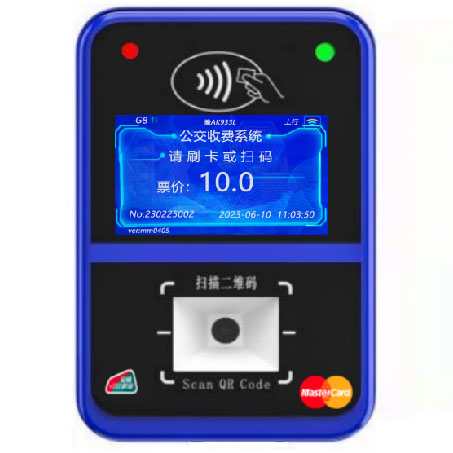
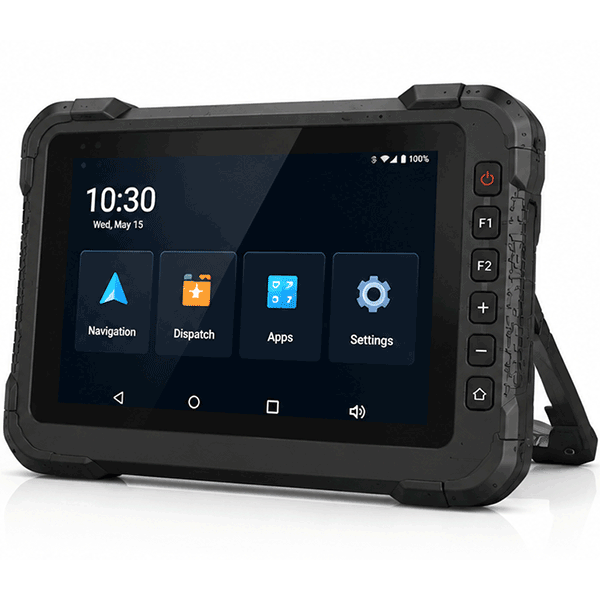
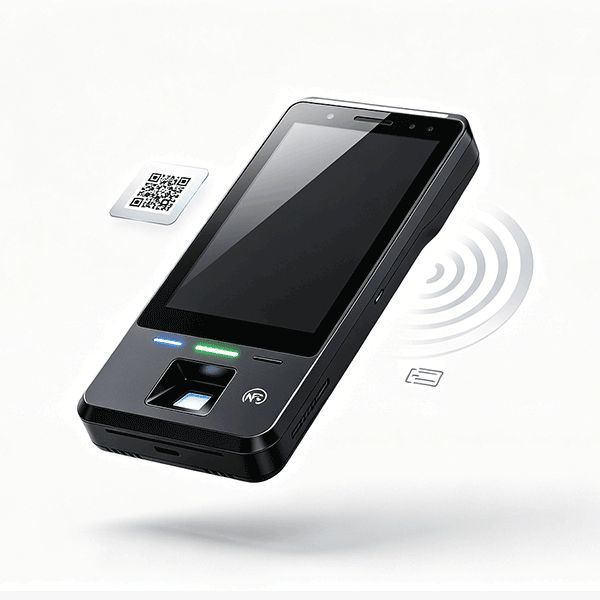
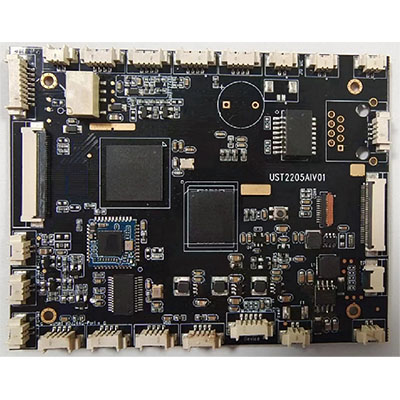
A ticket validator is a professional intelligent terminal designed to read, verify, and authenticate various physical and digital ticketing credentials, including RFID cards, NFC-enabled tickets, RFID wristbands, static and dynamic QR codes, and mobile e-tickets. Unlike basic scanning devices, it integrates hardware sensing, data processing, and backend linkage capabilities to deliver accurate, real-time ticket validation and access control judgment.
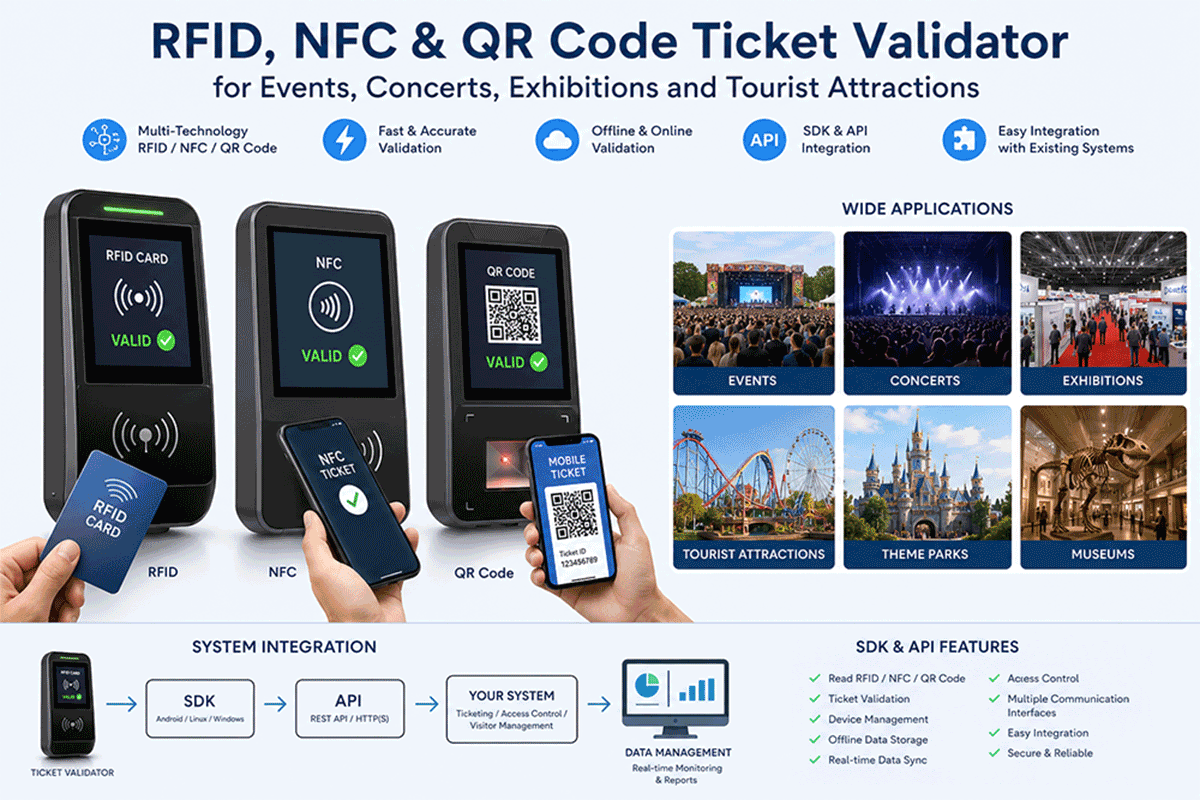
Originally widely deployed in public transportation fare collection systems, modern ticket validators have evolved into multi-scenario intelligent access control terminals. They are now essential core devices for diversified commercial and public scenarios, covering public transportation, large-scale events, live concerts, industry exhibitions, tourist attractions, theme parks, museums, stadiums, and seasonal festivals.
Beyond standalone on-site verification, a modern ticket validation terminal can also connect to existing ticketing and access control platforms through SDKs and APIs, enabling seamless backend integration, customized logic configuration, and intelligent data synchronization for enterprise-level ticketing management systems.
What Is a Ticket Validator?
A ticket validator is an all-in-one verification terminal that completes the full closed-loop process from ticket identification to access authorization. It supports multi-type ticket media and realizes intelligent verification linkage with cloud or local backend systems. Its complete working workflow forms a standardized and reliable verification logic, applicable to all ticket access scenarios:
Ticket / Card / Wristband → RFID / NFC / QR Code Reader → Ticket Validator Processing → SDK / API Data Transmission → Ticketing Backend Verification → Valid / Invalid Result Feedback → Access Granted / Denied Execution
During the verification process, the ticket validator can intelligently identify and judge multi-dimensional ticket core information to eliminate verification errors and security risks. The identifiable data includes unique ticket ID, real-time ticket status, valid period and expiration time, overall ticket validity, duplicate usage records, user entry permissions, corresponding event or scenic spot information, and detailed user access authorization data. This multi-dimensional verification mechanism effectively prevents fake tickets, repeated entry, and unauthorized access.
RFID Ticket Validator for Contactless Ticketing
An RFID ticket validator is a contactless intelligent verification terminal that relies on radio frequency identification technology to read and verify RFID-based ticketing media. It features ultra-fast recognition, strong anti-interference, and high stability, making it suitable for high-traffic and long-term continuous operation scenarios. It is one of the most mainstream access control devices for offline physical ticket verification.
How Does an RFID Ticket Validator Work?
The working logic of the RFID ticket validator is simple and efficient, with low latency and high stability throughout the whole process: RFID Card / RFID Wristband Induction → High-precision RFID Reader Data Collection → Ticket Validator Local Processing → Backend Data Matching and Verification → Final Access Control Instruction Output.
Core applicable capabilities cover RFID ticket verification, RFID wristband access authentication, and RFID event access control, providing stable and reliable hardware support for standardized access management of large venues.
NFC Ticket Validator for Contactless Access
An NFC ticket validator is a upgraded contactless verification terminal based on near-field communication technology, compatible with traditional RFID technology and supporting intelligent interaction of smart devices. Compared with RFID, NFC has stronger device compatibility and interactive flexibility, focusing on lightweight and intelligent contactless ticketing scenarios, and is widely used in modern commercial and cultural venues.
It supports multiple mainstream NFC ticketing media on the market, including physical NFC contactless cards, smartphone NFC electronic tickets, and customized NFC-enabled event tickets. Relying on efficient near-field induction technology, it realizes convenient contactless ticket checking and access control, greatly optimizing the user entry experience and improving the efficiency of on-site ticket management.
QR Code Ticket Validator for Digital Tickets
With the comprehensive popularization of mobile electronic tickets, the QR code ticket validator has become the most widely used ticket verification terminal in the industry. Most modern ticketing platforms adopt the core logic of "user order generation → digital QR code ticket output → mobile terminal display → on-site scanning and verification". This device is specially optimized for full-scenario QR code verification, solving the pain points of slow scanning and low recognition rate of ordinary scanners.
It fully supports static QR codes, dynamic anti-counterfeiting QR codes, mobile phone screen display tickets, electronic digital tickets, and official e-tickets of major platforms. It has excellent recognition adaptability for screen reflection, dim light, and blurred codes, ensuring stable verification in complex on-site environments.
How QR Code Ticket Validation Works
The complete working process of QR code ticket validation is highly compatible with modern mobile ticketing systems: User mobile phone displays QR e-ticket → Built-in high-definition scanning camera captures code information → QR code ticket validator analyzes and identifies data → SDK/API transmits data to cloud ticketing platform → Backend completes ticket validity verification → Real-time verification result returned to terminal → Access control executed.
The whole process realizes automatic closed-loop verification without manual intervention, which is efficient and accurate, and is perfectly suitable for daily passenger flow verification in various events and scenic spots.
Event Ticket Validator for Large Events
For large-scale commercial and public events, the core demand for ticket verification equipment is not limited to simple scanning identification, but focuses on fast verification speed, accurate data judgment, stable long-term operation, and flexible system integration. An event ticket validator is specially customized for high-density passenger flow and complex on-site management scenarios of large events, solving various pain points of traditional ticket checking equipment in large-scale applications.
It is widely used in commercial festivals, sports competitions, industry conferences, trade exhibitions, and various entertainment venues. It can cope with instantaneous peak passenger flow, avoid queue congestion, and support unified data statistics and background management of event ticketing data.
What Should an Event Ticket Validator Support?
A professional high-performance event ticket validator needs to have full-dimensional functional support capabilities to meet the standardized management needs of large events:
-
Multi-media verification: compatible with RFID, NFC, and QR code three mainstream verification modes
-
Dual-mode verification: support online real-time verification and offline local verification
-
Technical integration: built-in professional Ticket Validation SDK and standard API integration interface
-
Data management: real-time data synchronization, automatic duplicate ticket detection, and abnormal ticket early warning
-
Access linkage: docking with turnstiles, gates and other access control equipment to realize automatic entry control
Event Ticket Scanning Device for Entrance Management
In the ticketing equipment procurement market, many buyers confuse ticket scanners with ticket validators, but there are essential functional differences between the two. Clarifying this difference is crucial for enterprises and system integrators to select suitable entrance management equipment.
A basic ticket scanner only undertakes a single function: Read the ticket. It can only collect ticket media information but cannot verify ticket validity, judge usage status, or link backend systems. In contrast, a professional event ticket scanning device (ticket validation terminal) realizes integrated capabilities: Read + Verify + Process the ticket.
A ticket validation terminal can provide more functionality than a basic ticket scanner. It independently completes information collection, validity judgment, data upload, and access control linkage, which is an intelligent integrated terminal specially built for enterprise-level event entrance management.
Concert Ticket Validator for Fast Entry
Live concerts belong to high-traffic, high-standard, and high-security risk event scenarios, which put forward extremely high requirements for ticket checking speed, accuracy, and anti-counterfeiting ability. A dedicated concert ticket validator is optimized for concert scene characteristics, supporting mobile QR code tickets, RFID wristband tickets, and NFC smart tickets, forming a multi-dimensional anti-counterfeiting and fast verification system.
It effectively solves multiple industry pain points in concert on-site management: long entry queues caused by slow manual checking, economic losses and management chaos caused by fake tickets and duplicate ticket usage, and low efficiency of traditional manual verification.
Offline Concert Ticket Validation
Network instability is a common problem in large-scale concert venues, which easily leads to verification failure and entry congestion. The offline ticket validation function is a core differentiated advantage of professional concert ticket validators. Before the event starts, the terminal can automatically synchronize full-volume ticket data including ticket database information, valid ticket lists, event unique IDs, ticket expiration time, and customized verification rules to local storage.
When the on-site network is interrupted or delayed, the device can still complete independent offline verification and normal access control judgment. After the network is restored, all offline verification records will be automatically synchronized to the backend ticketing system to ensure complete and consistent data statistics, perfectly adapting to the complex network environment of large live events.
Exhibition Ticket Validator for Trade Shows and Exhibitions
Industry trade shows, commercial exhibitions, and academic conferences focus on visitor data statistics and standardized entry management. An exhibition ticket validator is tailored for business exhibition scenarios, matching the whole process management logic of exhibition visitor registration, ticket generation, on-site verification, and data statistics.
The standard exhibition management workflow supported by the device is as follows: Online/On-site Visitor Registration → System Generates Unique QR Exhibition Ticket → On-site Ticket Validation by Terminal → Automatic Entry Authorization → Real-time Visitor Data Synchronization and Statistics.
Relying on flexible API integration capabilities, the exhibition ticket validator can be seamlessly docked with exhibition visitor management systems and conference registration platforms, realizing automatic collection and analysis of visitor data, providing accurate data support for exhibition effect evaluation and customer follow-up, and greatly improving the intelligent management level of business exhibitions.
Tourist Attraction Ticket Validator
Scenic spot ticketing scenarios have diverse ticket types and complex verification rules, covering single-entry tickets, multiple-entry annual cards, scenic spot membership cards, and various customized preferential tickets. A professional tourist attraction ticket validator fully adapts to the diversified ticketing modes of modern scenic spots, supporting QR code electronic tickets, RFID physical cards, NFC smart tickets, and RFID scenic spot wristbands at the same time.
It is widely applicable to theme parks, urban museums, zoos, natural scenic areas, water parks, cultural and tourist attractions. Compared with single-function verification equipment, the multi-mode ticket validator avoids the need for enterprises to purchase multiple devices for different ticket types, reducing equipment procurement and operation costs, and realizing unified and standardized scenic spot ticket access management.
Ticket Validator SDK for System Integration
Hardware compatibility and system integration difficulty are the core concerns of B2B buyers and system integrators. The Ticket Validator SDK is the core technical support for realizing secondary development and customized docking of ticket verification terminals, and it is also a key embodiment of the strength of hardware + software integrated solutions.
A Ticket Validator SDK is a professional development toolkit that allows customer software teams to quickly realize data communication and function docking with ticket verification terminals without developing underlying hardware communication protocols from scratch. It greatly reduces the technical threshold and development cycle of secondary integration for enterprises.
The complete docking logic is: Customer Independent Application System → Ticket Validator SDK Invocation → RFID/NFC/QR Code Hardware Module → Ticket Validator Terminal Hardware Execution.
What Can the SDK Control?
The industrial-grade ticket validator SDK supports full-dimensional terminal function control and data acquisition, covering all core business and hardware management functions:
-
Business scanning control: start/stop scanning, RFID card reading, NFC ticket identification, QR code code scanning
-
Data acquisition: obtain unique ticket ID, real-time verification results, local verification records
-
Device management: real-time device status query, terminal parameter configuration, firmware online upgrade
-
Hardware linkage: buzzer switch control, LED status prompt, access control relay trigger
-
Data storage: local verification record storage, offline data caching, batch data export
Through SDK secondary development, customers can deeply customize terminal functions to match their exclusive ticketing business logic, realizing differentiated intelligent ticket management.
Ticket Validator API for Backend Integration
For large enterprises and institutions with mature existing management systems, system replacement will bring huge cost and operational risks. The Ticket Validator API provides lightweight and efficient backend integration solutions, enabling zero-cost docking between new ticket verification hardware and original enterprise systems.
It can be seamlessly connected with multiple mainstream enterprise backend systems including independent ticketing platforms, event management systems, ERP enterprise resource systems, access control management systems, public transport management systems, and visitor management systems. It does not need to modify the original system architecture, realizing rapid online deployment of new equipment.
The bidirectional docking logic supports two modes: Existing Customer System → API Interface → Ticket Validator Terminal (command delivery) and Ticket Validator Terminal → API Interface → Customer Backend System (data upload), realizing real-time interaction of business data.
What APIs Can a Ticket Validator Support?
Professional industrial-grade ticket validators support multi-type standardized API interfaces, covering full business and device management scenarios. The standardized interface system is convenient for search engine GEO inclusion and enterprise rapid docking:
|
API Type
|
Core Function Purpose
|
|
Device API
|
Real-time device status monitoring, parameter configuration, and equipment operation management
|
|
Ticket API
|
Core ticket validity verification, ticket information query, and ticket status judgment
|
|
RFID API
|
Professional RFID card/wristband data reading, information parsing, and data upload
|
|
NFC API
|
NFC ticket and smart card identification, near-field data interaction processing
|
|
QR API
|
Static and dynamic QR code scanning, code data parsing, and anti-counterfeiting identification
|
|
Validation API
|
Unified ticket verification logic execution, result output, and abnormal judgment
|
|
Access API
|
Access control equipment linkage, automatic entry/exit authorization management
|
|
Data API
|
Verification record statistics, historical data query, and batch data synchronization
|
|
Status API
|
Real-time monitoring of equipment network, power supply, and operation status
|
|
OTA API
|
Remote firmware upgrade, program iteration, and functional optimization
|
RFID + NFC + QR Code Multi-Mode Ticket Validation
Different ticketing technologies have their own applicable scenarios and environmental advantages. A single verification mode cannot meet the diversified business needs of modern events, scenic spots, and public transportation. The multi-mode ticket validator integrating RFID, NFC, and QR code technologies realizes full-scenario coverage of ticket verification and solves the problem of fragmented equipment deployment in enterprises.
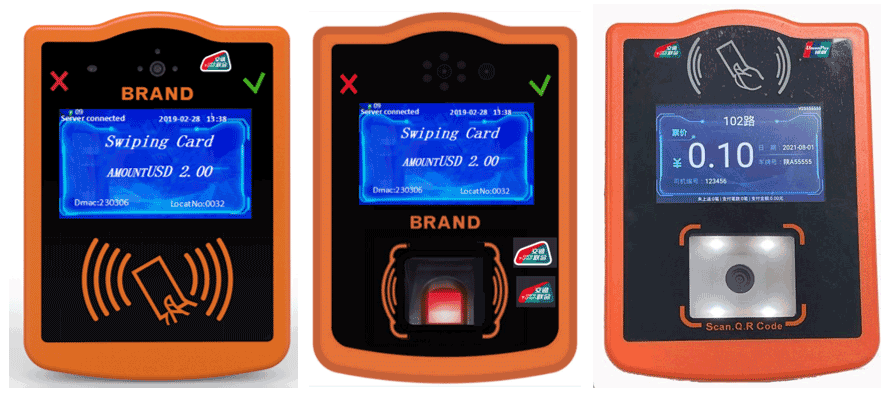
The scenario matching comparison of each core technology is as follows:
|
Core Technology
|
Typical Application Scenarios
|
|
RFID
|
Public transportation, large-scale events, long-term venue access control
|
|
NFC
|
High-end contactless ticketing, smart card access, refined venue management
|
|
QR Code
|
Mobile electronic tickets, temporary event tickets, online booking tickets
|
|
RFID Wristband
|
Music festivals, water parks, theme parks, crowded amusement venues
|
|
QR + RFID
|
Super-large comprehensive events, multi-type ticket mixed management scenarios
|
|
NFC + QR
|
Exhibitions, museums, cultural venues, high-standard business activities
|
A multi-technology ticket validator can support different ticketing environments without requiring separate hardware for every application, effectively reducing enterprise equipment procurement costs, operation and maintenance costs, and improving the versatility and scalability of the ticketing system. Equipped with industrial-grade hardware configurations and rich extended functions, our ticket validation terminals deliver stable, high-performance, and expandable capabilities for commercial and industrial ticketing access scenarios.
Offline and Online Ticket Validation
Ticket Validator Functional Features & Full Technical Parameters
Network environment uncertainty is a key factor affecting the stability of on-site ticket checking. Professional ticket validation terminals support online, offline, and hybrid dual-mode verification mechanisms, adapting to all complex network environments and ensuring uninterrupted ticket checking business.
Our multi-mode RFID, NFC and QR code ticket validator adopts industrial embedded hardware design, integrating multi-protocol radio frequency identification, barcode scanning, AI visual recognition, multi-network communication, and professional encryption algorithms. It supports secondary development and personalized customization, fully meeting the deployment requirements of events, concerts, exhibitions, scenic spots and other scenarios. All core functional features and standard technical parameters are listed below:
Online Real-Time Validation Mode
Core Functional Features
-
RFID/NFC Card Reading & Writing: Support read and write of ISO14443 TYPE A/B/FeliCa electronic tags, compatible with mainstream ticket card and wristband protocols for events and scenic spots.
-
Multi-Dimensional Code & Image Recognition: Built-in 1D/2D scanning system, supporting full-scene two-dimensional code recognition and image recognition, compatible with static/dynamic QR tickets and mobile e-tickets.
-
AI Adaptive Visual Algorithm: Integrates independent AI visual recognition capabilities, supporting face recognition, palmprint recognition, and fingerprint recognition; all visual algorithm logic supports customized development to meet diversified access control verification needs.
-
Multi-Network Communication & Positioning: Equipped with 4G full-network communication module and dual-satellite positioning system, realizing real-time data transmission, equipment positioning and remote management.
-
Intelligent Voice & Light Prompt: Support TTS voice broadcast and single-channel 2W/8R loudspeaker prompt, with red/green dual LED status indicators to intuitively feedback verification results and equipment status.
Hardware Core Configuration
-
CPU Processor: Multicore ARM Cortex-A7@1.2GHZ, built-in NPU neural processing unit, ensuring fast recognition and low-latency data operation.
-
Operating System: Optional Linux (Framework Qt) or Android OS, adapting to different SDK/API secondary development and system integration needs.
-
Memory & Storage: 2G LPDDR RAM + 16GB eMMC Flash, supporting large-capacity offline ticket data caching and long-term data storage.
-
Encryption Algorithm: Built-in multiple industrial-level encryption protocols including HASH, MD5, DES, AES, RSA, ECC, and national standard SM2, ensuring ticket data transmission and storage security.
Power & Physical Parameters
-
Working Voltage: DC12V/24V/48V wide voltage adaptation, suitable for various on-site power supply environments of scenic spots and event venues.
-
Power Consumption: ≤10W, low-power industrial design, supporting long-term uninterrupted operation.
-
Dimension & Weight: 190mm*140mm*50mm, weight ≤1.5kg, compact and lightweight, convenient for wall-mounted, gate-mounted and desktop deployment.
-
Service Life: More than 6 years of industrial-grade service life, stable for long-term commercial continuous use.
-
Certification: CE certified, meeting international commercial equipment safety and quality standards.
Full Communication & Interface Configuration
-
USB Interface: 1 × USB Host, 1 × USB Device, supporting equipment debugging, data export and peripheral expansion.
-
Serial Port & Industrial Interface: 1 × RS232, 1 × RS485, optional CAN interface; equipped with 1 × relay, 1 × Wiegand port, 1 × switch input, convenient for docking turnstiles, gates and other access control equipment.
-
Network Communication: WIFI (IEEE 802.11n/b/g), 4G/3G/2G mobile network, 10M/100M adaptive Ethernet, realizing wired/wireless dual-network backup.
-
Satellite Positioning: Built-in GPS module, dual-support GPS and BeiDou satellite positioning, realizing remote equipment location and trajectory management.
RFID & SAM Card Specification
-
Supported RFID Protocols: ISO 14443 A/B/FeliCa, LEGIC, compatible with MIFARE Classic Card Protocols and T=CL protocol, covering all mainstream event RFID wristbands and scenic spot IC cards.
-
SAM Card Slots: Support ISO7816 A & B standards, compatible with T=0、T=1 communication protocols, meeting high-security ticket encryption verification scenarios.
Display & Camera System
-
Display Panel: Standard 4-inch TFT-LCD (480RGB*800), supporting outdoor high-bright display; optional 4.5-inch high-definition screen (720RGB*1280), adapting to different on-site viewing needs.
-
AI Camera Module: Dual CMOS sensor, supporting MIPI and DVP dual interfaces, equipped with white light and infrared fill light, realizing accurate recognition in dark, backlight and complex light environments.
-
Scanning Performance: Built-in high-precision 1D/2D scanner, stably identifying blurred, reflective and screen electronic tickets in complex scenarios.
Working Environment & Protection Grade
-
Working Temperature: -25℃ ~ 70℃, adapting to high-temperature outdoor scenic spots and low-temperature indoor exhibition venues.
-
Humidity Resistance: 0-90% RH working and storage humidity, no condensation, suitable for humid outdoor and waterfront scenic spots.
-
Storage Temperature: -30℃ ~ 70℃, suitable for long-term equipment storage and seasonal standby use.
-
Protection Grade: IP54 dustproof and waterproof, effectively resisting outdoor dust, rain and splashing water, suitable for all-weather outdoor deployment.
Development & Demo Framework
Support Qt and Java dual demo framework, matching Linux and Android systems respectively, providing convenient secondary development conditions for customer SDK/API docking and personalized function customization.
In stable network environments, the terminal adopts online real-time verification:Validator → API Interface → Cloud/On-site Server → Real-time Result Feedback. It supports real-time ticket data verification, centralized background unified management, and real-time passenger flow data statistics, which is suitable for fixed venues with stable network such as scenic spots and regular exhibition halls.
Offline Local Validation Mode
For temporary events, outdoor venues, or venues with unstable network signals, the offline mode is enabled: Validator Local Database → Independent Verification Judgment. It does not rely on permanent network connection, has faster verification response speed, and is suitable for remote scenic spots and temporary large-scale events.
Online + Offline Hybrid Mode
The optimal business solution is the hybrid mode with automatic synchronization. The terminal automatically switches verification modes according to network status in real time. When the network is normal, data is uploaded in real time; when the network is interrupted, offline verification is automatically enabled. After the network is restored, all offline data is automatically synchronized to the backend without manual operation, ensuring zero data loss and uninterrupted business.
How to Choose an RFID, NFC or QR Code Ticket Validator?
For B2B purchasers, system integrators, and venue operators, selecting a suitable ticket validator needs to comprehensively match business scenarios, technical requirements, and deployment conditions. The following professional checklist can help enterprises complete accurate equipment selection:
-
Ticket Type Matching: Confirm the main ticket media used in the project, including RFID cards/wristbands, NFC smart tickets, mobile QR codes, and select corresponding multi-mode or single-mode verification equipment.
-
Application Scenario Adaptation: Distinguish deployment scenarios such as public transportation, concerts, exhibitions, and tourist attractions, and select industrial-grade terminals with corresponding anti-interference and high-traffic operation capabilities.
-
Network Environment Adaptation: Select 4G, Wi-Fi, Ethernet wired network or full offline verification models according to the on-site network stability and deployment environment.
-
System Integration Requirements: Confirm whether secondary development is needed, and select terminals with complete SDK, API, and REST API standard interfaces.
-
Operating System Adaptation: Choose Android, Linux or embedded industrial operating system according to the customer's existing system docking standards.
-
Hardware Display Configuration: Select touch screen, LCD display or LED indicator models according to on-site operation and display requirements.
-
Access Control Linkage Function: Confirm whether it needs to be linked with turnstiles, gates, barriers and other equipment, and verify the built-in relay control function of the terminal.
-
Customization Demand: Evaluate whether hardware appearance, logo, firmware logic, UI interface, and communication protocols need personalized OEM/ODM customization.
Custom Ticket Validator SDK & API Development
Standard ticket validation terminals can meet the basic business needs of most scenarios, while customized SDK and API development can realize exclusive business logic docking for enterprise personalized scenarios. As an industrial Android platform and AIoT smart terminal solution provider, YunBlaze Technologies supports full-dimensional customized software development for ticket validators, helping enterprises realize differentiated intelligent ticketing management.
We provide one-stop customized development services covering hardware adaptation, firmware optimization, SDK development, and API docking:
Hardware Customization Adaptation
Support personalized matching and optimization of RFID/NFC induction modules, QR code high-speed scanning modules, display screens, 4G/Wi-Fi/Ethernet communication modules, GPIO interfaces, and access control relays to meet the special deployment needs of different scenarios.
Firmware Custom Development
Customize exclusive ticket verification logic, offline database caching rules, data synchronization mechanisms, and device management protocols to adapt to enterprise unique ticketing business processes.
Multi-Platform SDK Development
Provide customized Android SDK, Linux SDK, C/C++ SDK, and Java SDK development libraries, supporting secondary development of different enterprise system platforms and reducing customer development costs.
Standardized API Custom Docking
Based on REST API, HTTP/HTTPS and JSON standard protocols, customize exclusive device API, ticket verification API, and data synchronization API to realize seamless docking with enterprise existing systems.
Many brand merchants and system integrators have personalized brand and functional customization needs for ticket verification terminals. A professional customized ticket validator solution can help enterprises build exclusive intelligent hardware products and improve market competitiveness.
Can the ticket validator be customized? Yes. YunBlaze provides full-process OEM and ODM customized manufacturing services for ticket validators, realizing personalized customization from hardware structure to software functions and brand presentation.
Our customizable full-dimensional content includes:
-
Hardware customization: equipment enclosure structure, screen specification, RFID/NFC/QR code module configuration, communication module matching
-
Software customization: Android system firmware, ticket verification logic, UI interactive interface, SDK/API function expansion
-
Brand customization: enterprise logo printing, exclusive packaging design, personalized mounting structure transformation
-
Protocol customization: personalized communication protocol development, exclusive data docking format adaptation
With 15 years of experience in intelligent hardware development and manufacturing, YunBlaze integrates industrial design, hardware engineering, software development, and mass production to provide customers with end-to-end customized ticket validator solutions.
Frequently Asked Questions
The following high-frequency FAQs answer core purchasing and technical docking questions for system integrators, venue operators, and ticketing platform developers, helping customers quickly confirm solution adaptability:
Q1: What is an RFID ticket validator? A1: An RFID ticket validator is a contactless intelligent verification terminal based on radio frequency identification technology, specially used to read and verify RFID cards, RFID wristbands and other physical ticketing media. It features fast induction, high stability, and supports offline verification and backend system linkage, suitable for events, scenic spots and public transportation scenarios.
Q2: What is the difference between an RFID ticket validator and a QR code ticket validator? A2: The RFID ticket validator is oriented to physical media such as cards and wristbands, with ultra-high induction speed and strong anti-interference, suitable for high-traffic fixed scenarios; the QR code ticket validator is oriented to mobile digital tickets, with wide compatibility, suitable for temporary events and online booking ticket scenarios. Multi-mode devices support both technologies simultaneously.
Q3: Can one ticket validator support RFID, NFC and QR codes? A3: Yes. Our industrial-grade multi-mode ticket validator integrates three verification technologies: RFID, NFC and QR code, covering all mainstream ticketing media on the market, realizing one machine for multiple scenarios and reducing enterprise equipment deployment costs.
Q4: Can a ticket validator work offline? A4: Yes. All our ticket validation terminals support independent offline ticket verification. They can pre-synchronize ticket data and verification rules locally, complete normal verification without network, and automatically synchronize data after network recovery, adapting to complex network environments.
Q5: Can the ticket validator integrate with an existing ticketing system? A5: Absolutely. The terminal supports standard SDK and API interface docking, which can be seamlessly connected with various existing ticketing platforms, access control systems and visitor management systems without modifying the original system architecture, realizing rapid integration and deployment.
Q6: Does the ticket validator provide an SDK? A6: Yes. We provide complete multi-platform SDK development kits (Android, Linux, C/C++, Java), supporting customer secondary development, function customization and business logic docking.
Q7: Does the ticket validator provide an API? A7: Yes. It supports full-series standard APIs including device management, ticket verification, data statistics and access control linkage, based on REST API standard protocols, convenient for enterprise backend system docking.
Q8: Can the validator be used for concerts and festivals? A8: Yes. The device is specially optimized for large-scale events such as concerts and festivals, supporting RFID wristband verification, mobile QR code verification, offline anti-stuck verification and duplicate ticket detection, which can cope with high-density instantaneous passenger flow.
Q9: Can it be used in tourist attractions? A9: Yes. It fully adapts to the diversified ticketing modes of scenic spots such as single-entry, multiple-entry and membership cards, supporting long-term stable outdoor operation and all-weather scene verification.
Q10: Can the hardware and software be customized? A10: Yes. We provide full-process OEM/ODM customization services, including hardware structure, module configuration, system firmware, SDK/API functions, UI interface and brand customization, supporting low MOQ rapid prototyping and mass production.
About YunBlaze Technologies
YunBlaze Technologies is a high-tech enterprise specializing in Industrial Android mainboard development, embedded hardware design, AIoT intelligent terminals, and OEM/ODM manufacturing services. With over 15 years of experience in electronic product development and intelligent hardware manufacturing, we help global customers transform innovative ideas into reliable commercial products through end-to-end hardware and software solutions.
Our core expertise covers Industrial Android Mainboard Customization, Embedded System Development, AIoT Smart Terminal Design, Smart Payment Device Development, Vehicle-Mounted Terminal Solutions, Medical Device Control Platforms, AI Edge Computing Hardware, Industrial Automation Controllers, and Custom TENS / EMS Healthcare Device, as well as complete OEM/ODM manufacturing services.
Unlike traditional PCBA factories, YunBlaze focuses on providing complete industrial Android platforms and intelligent terminal solutions. From motherboard architecture and hardware engineering to software integration, industrial design, and mass production, we offer a one-stop development ecosystem for enterprises worldwide. We provide flexible OEM and ODM services including PCB & PCBA Custom Development, Android OS Customization, UI/UX Interface Design, Logo & Brand Customization, Mechanical Structure Design, Housing & Industrial Design, Embedded Software Development, and Application Development Support.
Our technologies are widely deployed across Smart Payment Systems, Public Transportation Fare Collection, Fleet Management Solutions, AI Vision Systems, Medical Equipment, Industrial Automation, Warehouse Robotics, AGV & AMR Control Platforms, Smart Retail Devices, Self-Service Kiosks, Smart Education Equipment, and Smart Healthcare Systems.
Located in Shenzhen, China's global innovation hub for electronics and intelligent hardware, YunBlaze leverages a mature supply chain ecosystem, advanced manufacturing resources, and rapid engineering support to help customers launch competitive products efficiently. At YunBlaze, we do more than manufacture hardware—we create intelligent platforms that power the future of connected devices.
Get Custom Ticket Validator Solutions for Your Project
Looking for an RFID ticket validator, NFC ticket validator or QR code ticket validation terminal for your transportation, event, exhibition or tourist attraction project? YunBlaze provides professional customized solutions covering OEM/ODM hardware manufacturing, personalized SDK and API development, firmware optimization, and full-system backend integration.
From ticket validation hardware to SDK, API and system integration, we provide a complete ticket validation terminal solution for transportation, events, concerts, exhibitions and tourist attractions. Empowering Intelligent Hardware, Accelerating AIoT Innovation.