Offline Ticket Validation Device: A Reliable Solution for Events, Festivals and Smart Access Control
1. Introduction: Why Offline Ticket Validation Matters for Modern Events
Large-scale events, including music festivals, sports tournaments, theme park peak sessions, and government public activities, consistently face one critical operational pain point: unstable on-site network conditions. Network congestion, temporary signal outages, weak outdoor coverage, and fluctuating 4G/Wi-Fi connections often lead to ticket checking delays, visitor queue buildup, and chaotic entry management—issues that directly damage user experience and event brand reputation.
An Offline Ticket Validation Device is a dedicated industrial hardware terminal built to eliminate network-dependent access control risks. Unlike traditional online scanners that halt operations without stable internet, this smart terminal enables full local ticket verification, ensuring uninterrupted entry management throughout event sessions. Its core value lies in stabilizing on-site access workflows, reducing venue operational pressure, and delivering a smooth check-in experience for tens of thousands of visitors even in zero-network environments.
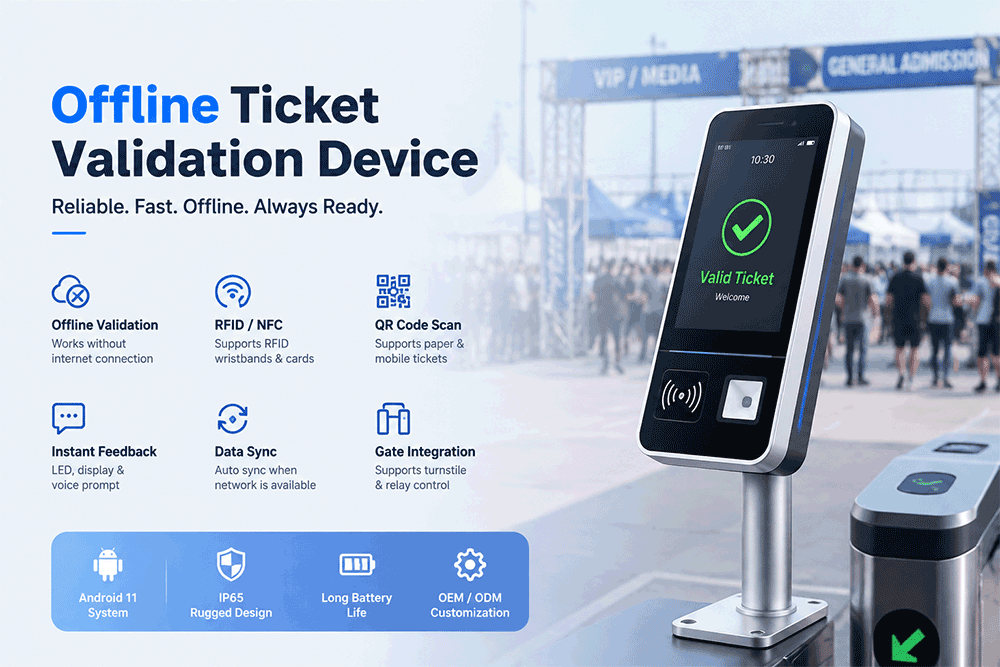
The working logic of offline ticket validation is straightforward and reliable. Event administrators first synchronize the complete ticket database, user access permissions, and event schedule data to devices before opening hours. All ticket verification, identity authentication, and entry record storage processes run locally on the terminal. Once the network is restored, the device automatically synchronizes all offline transaction data to the backend system for data reconciliation, ticket status updates, and operational report generation. This offline-first working mode has become the standard access control solution for high-traffic, large-scene event scenarios worldwide.
2. What Is an Offline Ticket Validation Device? Core Hardware & Functional Components
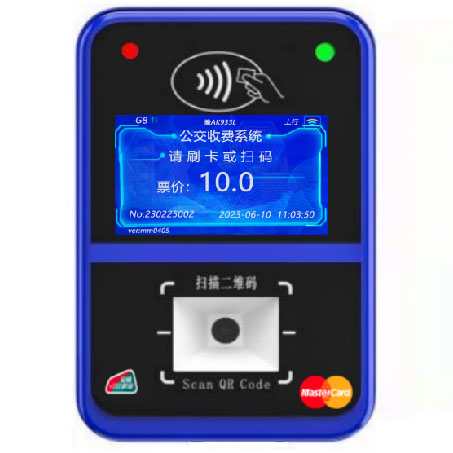
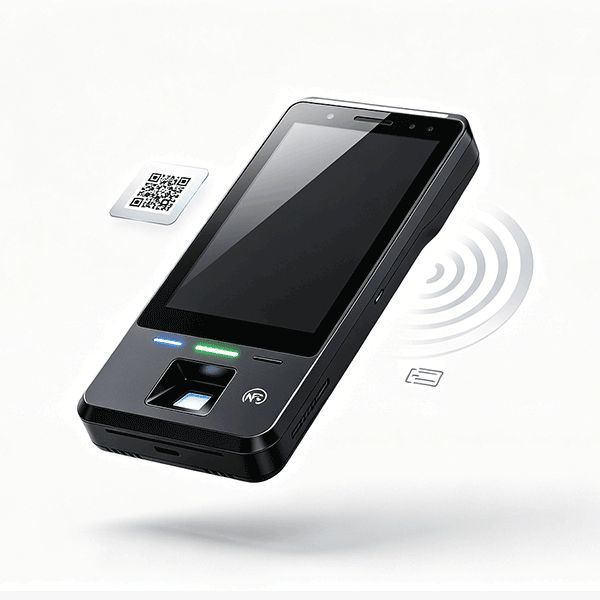
YunBlaze’s offline ticket validation devices are industrial-grade smart terminals integrated with multi-modal identification modules, embedded operating systems, and intelligent feedback systems. Tailored for harsh on-site event environments, the hardware combines stable industrial performance with multi-scenario compatibility, covering QR code, NFC, and RFID verification needs. Below are the core functional components that support full offline ticket validation capabilities.
2.1 Industrial Android Terminal Core
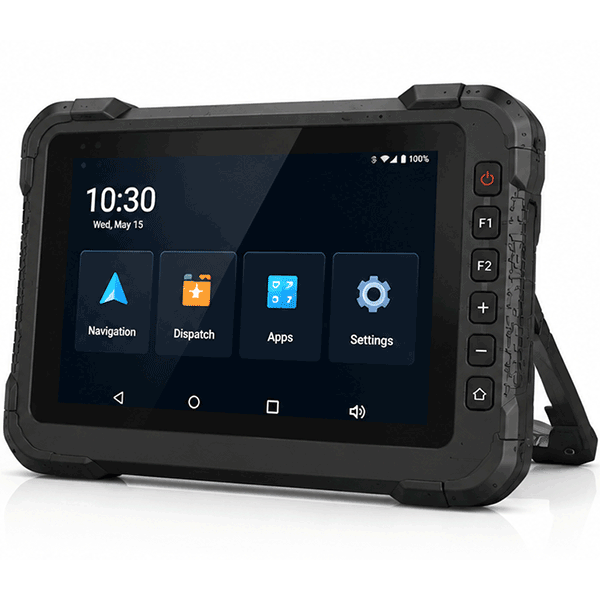
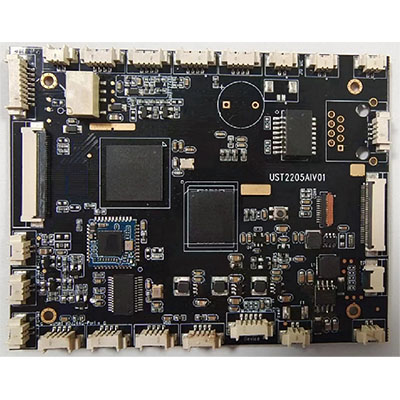
The entire validation system is powered by a high-performance industrial Android or Linux mainboard, the core foundation of stable offline operation. YunBlaze offers two mature hardware configurations to match different project budgets and scenario demands. The high-end version adopts a multi-core ARM Cortex-A53 processor with a main frequency of 1.8GHz and runs on Android 10 OS, equipped with 2GB DDR3 RAM and 16GB Flash storage. This configuration supports ultra-large data cache, storing up to 10 million check-in records and 5 million blacklist data, fully meeting the data storage demands of super-large events.
The lightweight model features a Cortex-A7 processor with built-in NPU, paired with Linux Qt or customizable Android systems, delivering lower power consumption (≤10W) while maintaining stable operational performance. Both versions support customized APK pre-installation, independent SDK/API integration, OTA remote firmware updates, and MDM remote device management. This allows event operators to independently adjust system functions, upgrade verification rules, and manage device status in batches without on-site operation, greatly improving post-operation efficiency. Relevant search keywords: Android Ticket Validator, Custom Android Access Terminal.
2.2 RFID & NFC Reader Module
To adapt to diversified event ticketing forms, our devices are equipped with high-sensitivity RFID/NFC reading modules, supporting HF RFID 13.56MHz frequency, all NFC Forum-compliant cards, and RFID wristbands widely used in music festivals and sports events. The module is fully compatible with mainstream chip protocols including MIFARE Classic, MIFARE DESFire, ISO14443 Type A/B, and FeliCa, covering mainstream event ticket media in the global market.
Different from ordinary simple UID reading devices, YunBlaze’s validation terminals support in-depth secure authentication, including sector/file hierarchical verification and encrypted card data identification. This effectively prevents ticket forgery, cloning, and illegal entry, solving the security loopholes of traditional single UID identification. The reading distance is controlled within 10cm with a response speed of less than 500ms, ensuring fast and accurate batch check-in for high passenger flow scenarios. For long-range identification demands in special scenarios, UHF RFID modules can be customized and expanded.
2.3 High-Precision QR Code Scanner
The built-in industrial 1D/2D scanning system supports fast identification of printed paper tickets, mobile electronic tickets, and dynamic QR codes, adapting to exhibition conferences, stadium events, and public cultural activities with mixed ticket forms. Equipped with adaptive visual algorithms and fill light auxiliary technology, the scanner maintains stable recognition accuracy in strong light, dim light, and complex outdoor light environments, avoiding scanning failure caused by on-site light interference.
2.4 Intelligent Multimodal Feedback System
Each terminal is fitted with a complete human-computer interaction feedback system, including LED status indicators, high-volume speakers, real-time display prompts, and vibration feedback functions. The system supports 400+ built-in voice contents and customizable voice packages, with remote voice download and update available. During check-in, green lights and "Valid Ticket" voice prompts confirm successful verification, while red lights and "Invalid Ticket" reminders alert staff to expired, fake, or repeatedly used tickets. The 4-inch/4.5-inch outdoor high-brightness display screen clearly presents verification results and device status, enabling staff to quickly judge and process on-site abnormal situations.
3. How Does an Offline Ticket Validation System Work? Complete Workflow
The offline ticket validation workflow forms a closed-loop data system from pre-event data preparation to post-event data synchronization, ensuring zero data loss and 100% accurate verification. The standardized four-step workflow is suitable for all event access control scenarios:
Step 1: Pre-Event Ticket Data Preparation Before the event starts, administrators import the full ticket database, visitor access permissions, gate access rules, and event time parameters from the backend ticketing system to offline validation devices via Wi-Fi, Ethernet, or 4G. The device caches all data locally and supports real-time permission adjustment and data supplement before the event opening.
Step 2: Local Real-Time Ticket Verification During the event, the device independently completes all verification work offline. It intelligently checks ticket ID validity, RFID/NFC chip encryption information, QR code authenticity, valid entry time, and gate access permissions. The whole process requires no network participation, with ultra-fast response speed to avoid visitor congestion.
Step 3: Local Entry Record Storage All successful and failed check-in records are automatically stored in the device’s local Flash memory, including accurate check-in time, verification gate number, operator information, and ticket attribute data. The large-capacity storage design ensures that even multi-day continuous large events will not cause data overflow or loss.
Step 4: Post-Event Data Synchronization & Reconciliation After the network is restored, the terminal automatically uploads all offline stored records to the cloud backend, synchronizes real-time ticket status (used/unused/expired), and generates standardized event access data reports. The data supports secondary analysis, facilitating event operation summary, passenger flow statistics, and subsequent activity optimization.
4. Key Features to Consider When Choosing an Offline Ticket Validator
For event ticketing companies, stadium operators, theme park managers, and government event organizing parties, selecting a high-quality offline ticket validation device directly determines the stability and efficiency of on-site access control. The following core parameters and functional indicators are key procurement standards for industrial-grade validators:
4.1 RFID & NFC Compatibility and Security
Priority should be given to devices with full-protocol chip compatibility and encrypted authentication capabilities. Excellent equipment needs to support mainstream global chip protocols such as MIFARE Classic, MIFARE DESFire, and NFC Forum cards, and support hierarchical encrypted verification instead of simple UID reading. This can effectively resist ticket cloning and fraud risks, which is particularly critical for high-value tickets and long-term membership card verification scenarios.
4.2 Industrial OS and Software Expandability
Stable operating system and flexible software integration capabilities are the core of long-term device use. YunBlaze’s devices support Android 10 and customized Linux systems, with 2GB RAM + 16GB standard storage (expandable on demand). The open SDK and API interfaces support seamless docking with various third-party ticketing platforms, access control systems, and gate equipment. It also supports OTA remote upgrades and MDM batch management, reducing later maintenance costs for enterprises.
4.3 Diversified Network Connectivity Options
Different scenarios require matched network modules. Outdoor temporary events such as music festivals and roadshows are suitable for 4G full-network communication modules, supporting global multi-band network adaptation. Fixed entrances of stadiums, theme parks, and exhibition halls can choose Ethernet and PoE power supply integrated interfaces. All devices are equipped with Wi-Fi 802.11b/g/n and Bluetooth 4.0 LE, meeting the network switching and data transmission demands of complex scenarios.
4.4 Power Supply Stability and Battery Backup
On-site power instability is a common hidden danger of event equipment failure. Our devices support wide-voltage DC 9V-38V power input and optional PoE power supply, adapting to different venue power systems. Built-in UPS backup battery ensures that the device can continue to work for a period of time in case of sudden power failure, avoiding sudden paralysis of access control. The low power consumption design (≤15W) supports long-term continuous operation for multi-day events.
4.5 Rugged Industrial Environmental Adaptability
Event sites are mostly open-air, with complex and changeable environments. Industrial-grade protection is essential for stable device operation. YunBlaze’s validation terminals reach IP54/IP56 dustproof and waterproof levels, with IK6 anti-collision design, adapting to outdoor rain, dust, and accidental collision scenarios. The working temperature range of -25℃ to +75℃ and humidity adaptation of 0%-95% RH ensure normal operation in high-temperature summer festivals and low-temperature winter sports events. The MTBF exceeds 30,000 hours, and the service life is up to 6-15 years, with ultra-high long-term cost performance.
5. Core Application Scenarios of Offline Ticket Validation Devices
With offline anti-interference capability and multi-modal verification functions, offline ticket validation devices have become standard equipment for various large public events and scenic spot access control, covering multiple core application scenarios:
5.1 Music Festivals and Outdoor Carnivals
Music festivals feature ultra-high instantaneous passenger flow, dense crowds, and unstable outdoor network signals. The device supports batch RFID wristband offline verification, with a fast recognition speed of less than 500ms, which can quickly divert visitors and eliminate queuing congestion. The offline working mode completely solves the problem of equipment shutdown caused by network collapse in peak periods, ensuring the smooth progress of multi-day continuous festivals.
5.2 Stadiums and Sports Events
Professional stadiums have high requirements for access control security and hierarchical management. The device supports season tickets, VIP exclusive access cards, and member identity offline verification, realizing hierarchical access management for different spectator areas. The encrypted authentication function effectively prevents fake tickets from entering the venue, protecting the ticketing interests of event organizers and the viewing experience of audiences.
5.3 Theme Parks and Scenic Spots
Theme parks have complex entry rules, including annual passes, multi-entry tickets, and packaged combo tickets. The offline ticket validation device supports local storage of multi-dimensional ticket rule data, realizing automatic identification of valid times and entry times. The industrial dustproof and waterproof design adapts to long-term outdoor fixed installation, meeting the long-term and high-frequency access control demands of scenic spots.
5.4 Exhibitions and Conferences
Industry exhibitions and business conferences usually adopt mixed check-in methods of paper badges and electronic tickets. The device’s dual QR code and NFC recognition function can meet the simultaneous verification of visitor badges and electronic tickets. The offline storage of check-in data ensures that the on-site registration work is not affected by network fluctuations, providing accurate visitor data support for exhibition organizers.
5.5 Public Transportation and Government Large-Scale Activities
The device is also applicable to temporary access control of bus terminals, metro public activities, and government large-scale public welfare events. It supports secondary development of identity recognition functions (optional face recognition and ID card recognition), meeting the higher-level identity verification and access control management needs of public security events.
6. Offline Ticket Validator vs Online Ticket Scanner: Which Is Better?
Many event operators struggle with choosing between traditional online ticket scanners and industrial offline validation devices. The following intuitive comparison clearly shows the differences in core performance of the two devices in event scenarios:
|
Feature
|
Online Ticket Scanner
|
Offline Ticket Validator
|
|
Internet Requirement
|
Mandatory, real-time network connection required
|
Not required, full offline operation supported
|
|
Network Failure Performance
|
Stops all validation work immediately
|
Continues stable operation without interruption
|
|
Large Event Adaptability
|
Limited, prone to network congestion failure
|
Excellent, customized for high-traffic scenarios
|
|
Data Security
|
Cloud dependent, risky in network transmission
|
Local encrypted storage + cloud synchronization, double security
|
|
Remote Management
|
Basic remote control only
|
Full MDM remote management, OTA upgrade supported
|
From the comparison, it is clear that online scanners are only suitable for small indoor events with stable networks. For medium and large-scale outdoor events, stadium competitions, and long-term scenic spot access control, offline + online hybrid validation solution is the most scientific and reliable choice. It not only ensures zero-risk operation in network failure scenarios but also realizes cloud data synchronization and remote intelligent management, balancing stability and intelligence.
7. System Integration Guide: Connect Validators with Your Existing Platform
YunBlaze’s offline ticket validation devices support multi-dimensional system docking, compatible with most mainstream ticketing systems and access control equipment on the market. We provide complete REST API interfaces, open SDK development kits, and customizable Android APK programs to help customers quickly complete system integration without large-scale transformation of existing platforms.
The standard integration workflow is simple and efficient: First, the customer’s independent ticket platform synchronizes ticket data and permission rules to the device through API interfaces. Then the offline validator completes on-site automatic verification and record storage. Finally, the device links with gate controllers and turnstile equipment through IO output and Wiegand ports to realize automatic gate opening and unattended access control. After the event, all data is uploaded to the backend to update ticket status and generate analysis reports, realizing a fully closed-loop intelligent access control system.
8. Custom OEM/ODM Solutions for Offline Ticket Validation Devices
As a professional industrial intelligent terminal manufacturer with 15 years of embedded development experience, YunBlaze provides one-stop customized OEM/ODM services for global event access control customers, covering hardware, software, and mechanical structure personalized customization to meet the differentiated needs of different brands and scenario projects.
Hardware Customization: Customers can freely configure RFID/NFC module types, QR code scanner precision, display screen size (4-inch/4.5-inch/7-inch), and expand functional modules such as face recognition and ID card recognition. We support customized adjustment of reading distance, response speed, and power supply modes.
Software Customization: Provide pre-installed exclusive APK, personalized UI/UX interface design, customized voice prompt content, and independent OTA remote upgrade system. Support secondary development of encryption algorithms such as AES, RSA, and SM2 to meet high-standard data security requirements of government and large-scale events.
Mechanical & Installation Customization: Support pole mounting, wall mounting, and turnstile integrated installation modes, adapting to 32mm-35mm handrail fixed brackets for venues. Customize equipment appearance size, shell material, and protection level to match the overall style of the venue.
9. How to Choose a Reliable Offline Ticket Validator Manufacturer
The quality of offline ticket validation equipment directly affects the safety and efficiency of event operation. When selecting a manufacturer, global customers need to focus on the following four core capabilities to avoid equipment failure and after-sales risks:
First, Professional Industrial Hardware R&D Experience: Prioritize manufacturers with independent industrial motherboard development and embedded system design capabilities, not simple assembly factories. YunBlaze’s 15 years of intelligent hardware R&D experience ensures that the equipment can adapt to long-term high-intensity industrial scenarios with stable performance.
Second, Complete Software Integration Capabilities: Excellent equipment needs open SDK/API interfaces and professional technical support teams to assist customers in system docking and secondary development, solving the problem of poor compatibility of traditional equipment.
Third, Mature Mass Production & Delivery Capabilities: Support rapid prototype proofing, small-batch trial production, and large-scale mass production, with flexible low MOQ services to meet the phased delivery needs of different projects.
Fourth, Complete Global Certification System: Formal industrial equipment must pass CE, FCC, RoHS and other international certifications, and support customized export documents such as SABER for Saudi Arabia, ensuring smooth customs clearance and global project deployment. All YunBlaze devices have complete qualification certifications and meet international industrial standards.
10. Conclusion
In the field of modern event access control and smart venue management, network instability has always been the biggest hidden danger restricting efficient operation. The Offline Ticket Validation Device completely solves this industry pain point through offline local verification, multi-modal identification, and industrial-grade stable performance. Whether it is RFID wristband verification for music festivals, season ticket management for stadiums, multi-entry verification for theme parks, or access control for government public events, this RFID Ticket Validator and Android Access Control Terminal can deliver reliable and efficient solutions.
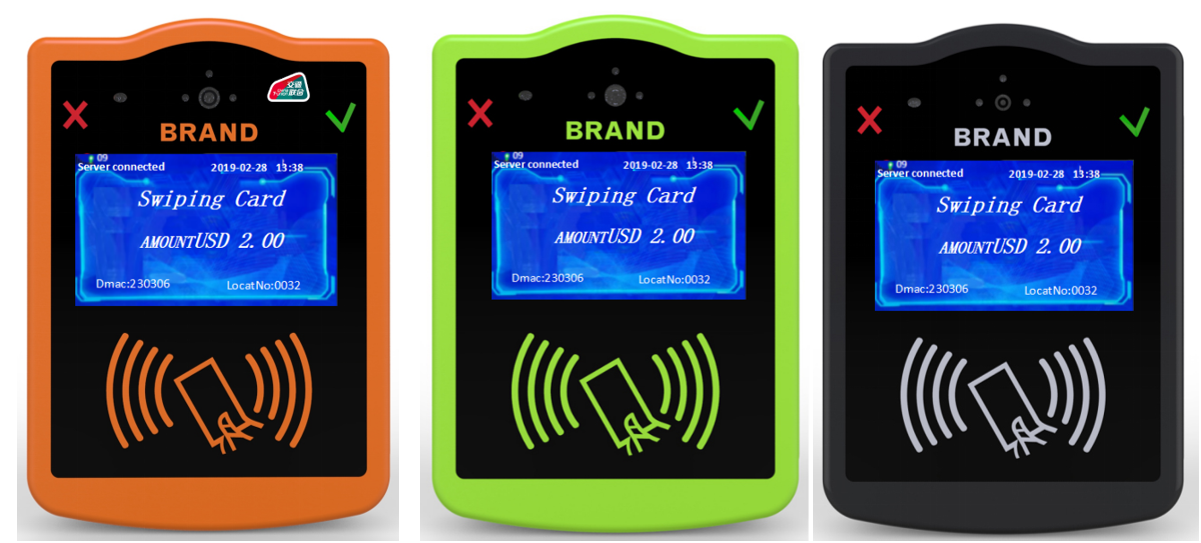
As a professional provider of event entry management systems, YunBlaze Technologies focuses on the R&D, production and customization of industrial-grade offline ticket validation terminals. We support QR code, NFC, RFID multi-mode verification, full offline operation, and seamless backend system integration, providing one-stop OEM/ODM customized intelligent access control hardware solutions for global event ticketing companies, venue operators, and system integrators.
Looking for high-stability offline ticket validation devices for your event projects? Contact YunBlaze to get customized technical solutions and factory direct quotation support.