I. The Era of Digital Payments: Upgrading Consumption in
Bus Canteens and Campuses
With the rapid proliferation of mobile payments, the
digital transformation of public consumption scenarios has accelerated.
Traditional cash and card-based methods are being swiftly replaced by more
convenient and efficient digital solutions, particularly in high-traffic,
high-frequency environments like bus company canteens and campus dining halls.
1. Pain Points of Traditional Models
-
Bus Systems: Reliance on outdated card-swiping equipment requires staff to
carry physical cards at all times. Lost or damaged cards create
inconvenience for employees and management headaches for administrators.
-
Campus Scenarios: Concentrated peak dining hours combined with slow card-swiping
speeds lead to long queues, negatively impacting the student experience
and operational efficiency.
2. The Next-Generation Solution
"Scan-to-Pay
+ Intelligent Terminals" has emerged as
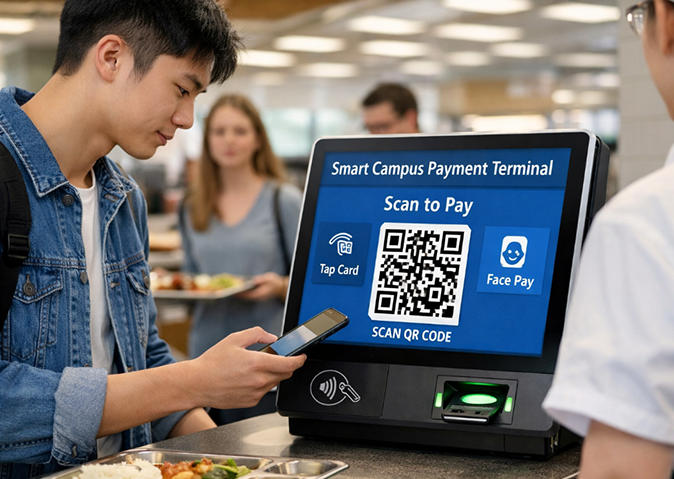
the definitive solution. These terminals integrate multiple payment methods,
enable second-level transactions, and seamlessly connect to backend management
systems. As smart city and smart campus initiatives deepen, these intelligent
terminals have become indispensable infrastructure for digital transformation
in logistics and catering.
Keywords: Smart Canteen Payment Terminal | Campus Scan Device | Bus Canteen
Charging System | Smart Campus Consumption Terminal
II. Product Definition & Application Scenarios
1. What is an Intelligent Scan Consumption Terminal?
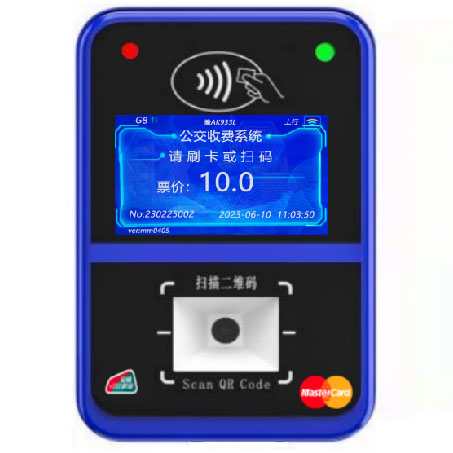
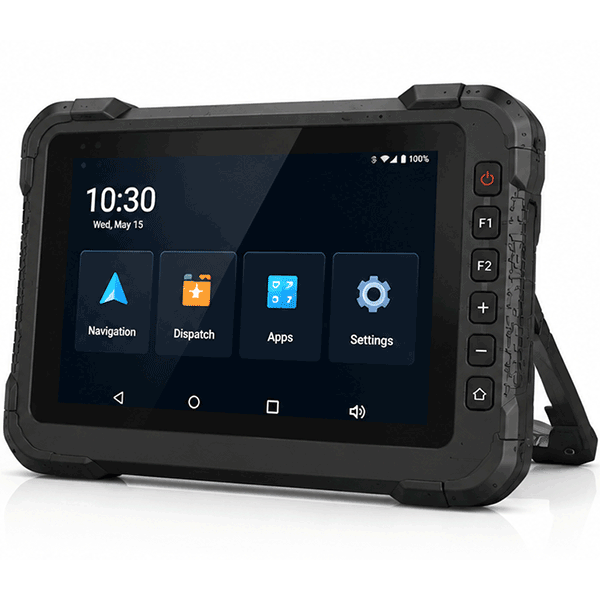
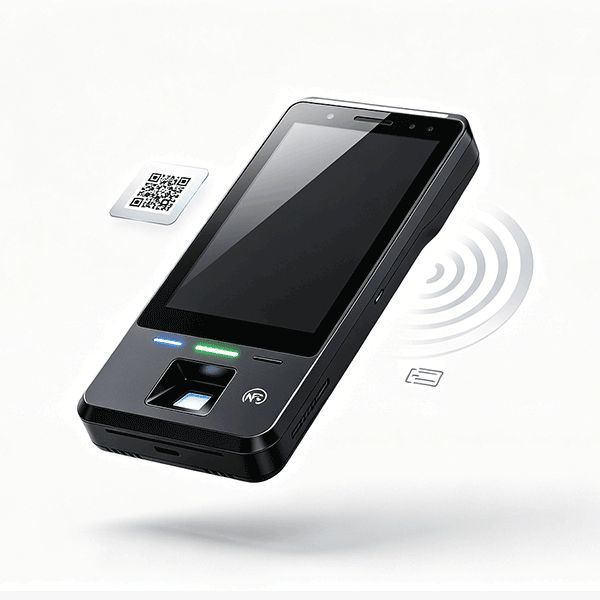
Designed specifically for public consumption scenarios,
these integrated digital devices meet the diverse needs of both consumers and
managers. Core capabilities include:
-
QR Code Scanning: Compatible with mainstream payment platforms for instant
settlement.
-
NFC Compatibility: Supports existing employee ID cards, campus cards, and other
contactless IC cards.
-
Facial Recognition: Enables card-less and phone-less payments for maximum
efficiency.
-
Account Management: Facilitates meal subsidy distribution, spending limit
settings, and real-time balance inquiries.
2. Key Application Scenarios
|
Sector
|
Specific Scenario
|
Core Value Proposition
|
|
Bus Systems
|
Staff Canteens
|
Provides fast, reliable payment for daily
employee meals.
|
|
|
Station Restaurants
|
Solves convenient dining needs for
drivers and staff on shift.
|
|
|
Driver-Specific Windows
|
Optimized for tight shift schedules with
ultra-fast transaction speeds.
|
|
Smart Campus
|
University Canteens
|
The core application; eliminates
peak-hour queues and enhances student experience.
|
|
|
Campus Supermarkets
|
Supports quick checkout for daily
necessities.
|
|
|
Dormitory Vending
|
Integrates with vending machines for 24/7
self-service access.
|
|
|
Library Services
|
Simplifies payment for printing and
copying services.
|
III. Core Functional Modules
To accommodate diverse user habits, terminals support a
comprehensive suite of payment methods:
-
Mobile Wallets: WeChat Pay, Alipay, UnionPay QR (cloud quick pass).
-
Physical Cards: NFC Campus Cards, Employee IC Cards (seamless legacy system
integration).
-
Biometrics: High-accuracy Facial Recognition.
-
Impact: Reduces transaction time to 1-2 seconds,
drastically cutting queue lengths. It also eliminates cash handling risks
(collection, counting, storage), minimizing financial errors.
2. Efficient Consumption Management Platform
Beyond hardware, the system includes a robust backend for
data-driven management:
-
Real-Time Analytics: Monitors transaction volume and revenue instantly.
-
Subsidy Management: Automates the distribution, adjustment, and deduction of meal
allowances.
-
User Administration: Handles account lifecycle (opening, closing, password resets)
and custom spending limits.
-
Data Intelligence: Generates detailed reports on consumption patterns and peak
times to optimize operations.
3. Industrial-Grade Hardware Specifications
Built for high-frequency use in demanding environments:
-
Interface: High-definition touch screen with manual input capability.
-
Scanning Module: High-speed engine capable of reading blurred or tilted QR
codes.
-
Card Reader: High-sensitivity NFC/IC module for instant response.
-
Camera: HD facial recognition camera with anti-spoofing technology.
-
Connectivity: Multi-mode support (4G, Wi-Fi, LAN) ensures stable, real-time
data synchronization.
-
Durability: Designed to withstand high temperatures and humidity while
handling high concurrency without lag.
IV. Strategic Advantages
-
Maximized Dining Efficiency
-
Traditional card swiping takes
3-5 seconds; scan/facial recognition takes 1-2
seconds. This significantly alleviates peak-hour
congestion.
-
Enhanced Management Transparency
-
Every transaction is digitally
recorded (time, amount, method). Managers can audit data instantly,
preventing fraud and simplifying financial reconciliation.
-
Reduced Operational Costs
-
Labor: Reduces the need for dedicated cashiers.
-
Risk: Eliminates cash handling processes and associated security
risks.
-
Accuracy: Automated recording removes human accounting errors.
-
Empowering Smart Ecosystems
-
Terminals act as IoT nodes,
integrating with access control, attendance systems, and city-wide card
networks to foster a cohesive smart city/campus environment.
V. Selection Guide: Choosing the Right Terminal
When selecting equipment, bus enterprises and educational
institutions should prioritize four key dimensions:
1. Stability & Durability
-
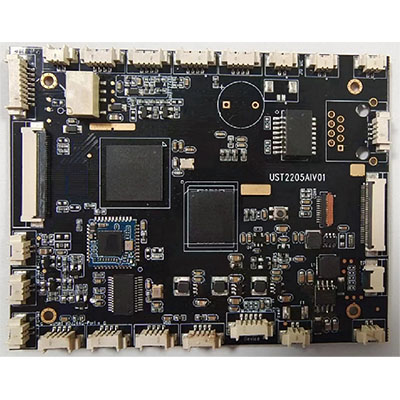
Requirement: Industrial-grade components (motherboard, power supply,
scanning modules).
-
Metric: Low failure rate and proven ability to run continuously in
high-traffic environments.
2. Payment Compatibility
-
Requirement: Full support for mainstream mobile wallets, NFC, and facial
recognition.
-
Critical Factor: Must integrate seamlessly with existing card systems to protect prior investments.
3. System Scalability
-
Requirement: Open API interfaces for integration with third-party ERP or
Smart Campus platforms.
-
Future-Proofing: Support for customized development to adapt to evolving
business needs.
4. After-Sales & Technical Support
-
Service Model: Look for providers offering remote maintenance, OTA
(Over-The-Air) firmware updates, and on-site technical support.
-
Response: Ensures rapid resolution of issues to minimize downtime.
VI. Future Trends: The Evolution of Smart Dining
Driven by AI, IoT, and Big Data, the next generation of
consumption terminals will focus on deeper intelligence and integration:
-
Frictionless Payment: Advanced AI facial recognition will enable true
"walk-and-pay" experiences.
-
Health & Nutrition Integration: Terminals will link to nutritional analysis systems, offering
users dietary insights and promoting healthy eating.
-
Data-Driven Operations: Big data will optimize menu planning, inventory management,
and supply chains.
-
Unmanned Cafeterias: Fully automated dining experiences from ordering to payment,
centered around intelligent terminals.
-
Holistic Campus Platforms: Convergence of consumption, access control, attendance, and
health management into a single unified digital ecosystem.
VII. Conclusion
Bus canteen and smart campus scan payment terminals are far
more than simple payment tools; they are critical infrastructure for the digital upgrade of
public services. By resolving the inefficiencies of traditional
methods, they enhance speed, transparency, and cost-effectiveness while laying
the groundwork for broader smart city and smart campus ecosystems.
As mobile payment and IoT technologies continue to evolve,
the scope and sophistication of these terminals will expand. For equipment
manufacturers, system integrators, and solution providers, delivering
high-quality, stable, and scalable scan payment solutions represents a pivotal
opportunity to drive market growth and achieve sustainable development.